The Lightning Bolt is a relatively bright asterism formed by the brightest stars in the constellations Pegasus, Aquarius, and Capricornus: Enif, Sadalsuud, Sadalmelik, and Deneb Algedi. The star pattern appears in the same region as the Water Jar and helps observers identify the faint zodiac constellations Aquarius and Capricornus.
Three of the four stars of the Lightning Bolt are the lucidae (brightest stars) of their home constellations. Only Enif, the brightest star in Pegasus, shines at second magnitude. The remaining three are third magnitude stars and can be challenging targets from heavily light-polluted areas.
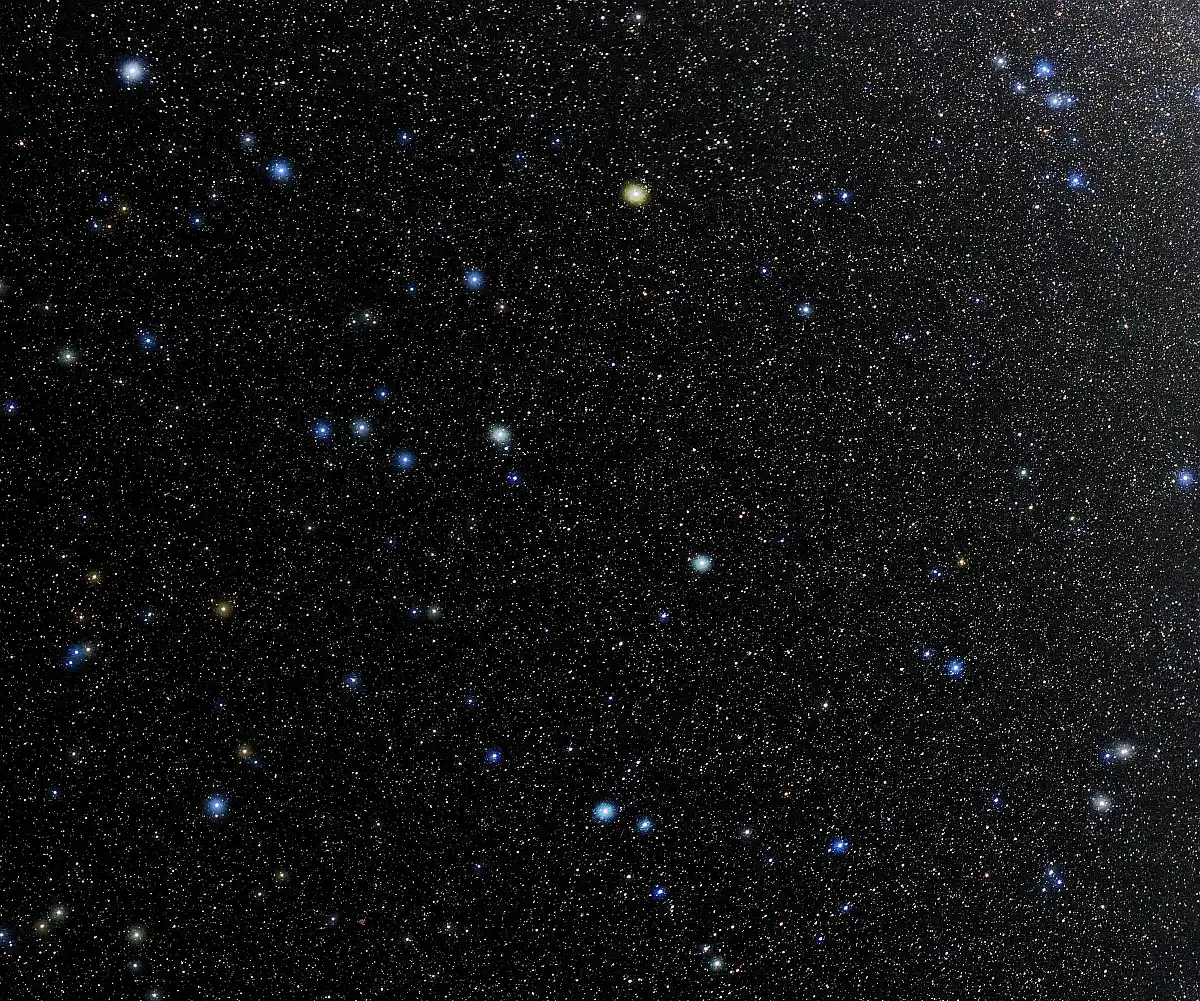
The Lightning Bolt asterism, image (cropped from original): E. Slawik/NOIRLab/NSF/AURA/M. Zamani (CC BY 4.0)
Where is the Lightning Bolt in the sky?
The Lightning Bolt appears southwest of the more familiar Great Square of Pegasus, a brighter and larger asterism that dominates the evening sky during the late summer and early autumn in the northern hemisphere.
Enif, the northermost star, is the brightest point of light in the region between Markab in the Great Square and Altair in Aquila. Sadalmelik is the nearest bright star just west of the Water Jar of Aquarius. Sadalsuud appears southwest of Sadalmelik, and Deneb Algedi is southeast of Sadalsuud, completing the zig-zag pattern of the asterism.
Deneb Algedi marks the left tip of the faint V of Capricornus. The right side of the V can be found by extending a line through the Shaft of Aquila, formed by Altair with Tarazed and Alshain, the two relatively bright stars flanking it.
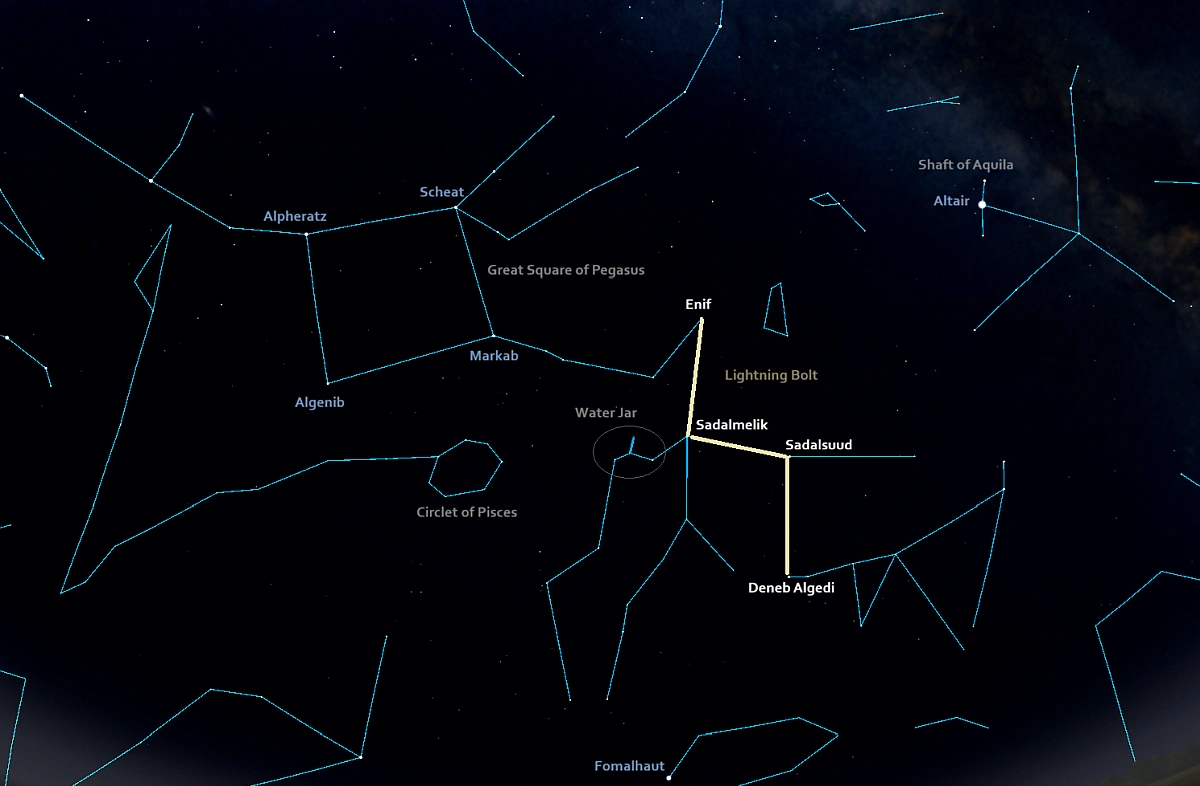
Location of the Lightning Bolt asterism, image: Stellarium (annotated for this article)
Best season to see the asterism
The constellations of the Lightning Bolt are best seen in September and October, when they appear higher above the horizon in the early evening.
All four stars that form the pattern lie close to the celestial equator and are visible from almost anywhere on Earth for at least part of the year. Enif, the northernmost of the four stars, lies less than 10 degrees north of the celestial equator, while Deneb Algedi, the southernmost star, appears around 16 degrees south of it. Enif is the only star located in the northern celestial hemisphere. Sadalmelik, the second northernmost star, can be used to trace the celestial equator. It is located only 19 arcminutes south of it.
Stars of the Lightning Bolt
The stars that form the Lightning Bolt appear similarly bright. Enif (mag. 2.4) is the brightest, followed by Deneb Algedi (mag. 2.81), Sadalsuud (mag. 2.87), and Sadalmelik (mag. 2.942). The luminaries of Capricornus and Aquarius appear equally bright to the unaided eye.
While most asterisms are formed by unrelated stars that only appear in the same region of the sky from our point of view, three of the four stars of the Lightning Bolt are family. The supergiants Enif, Sadalsuud and Sadalmelik are believed to have formed in the same extended stellar nursery at around the same time. They retain similar motions through space that take them roughly perpendicular to our galaxy’s plane.
Sadalsuud and Sadalmelik are both yellow supergiants, while Enif is a cooler orange supergiant. Enif is the only supernova candidate in the group.
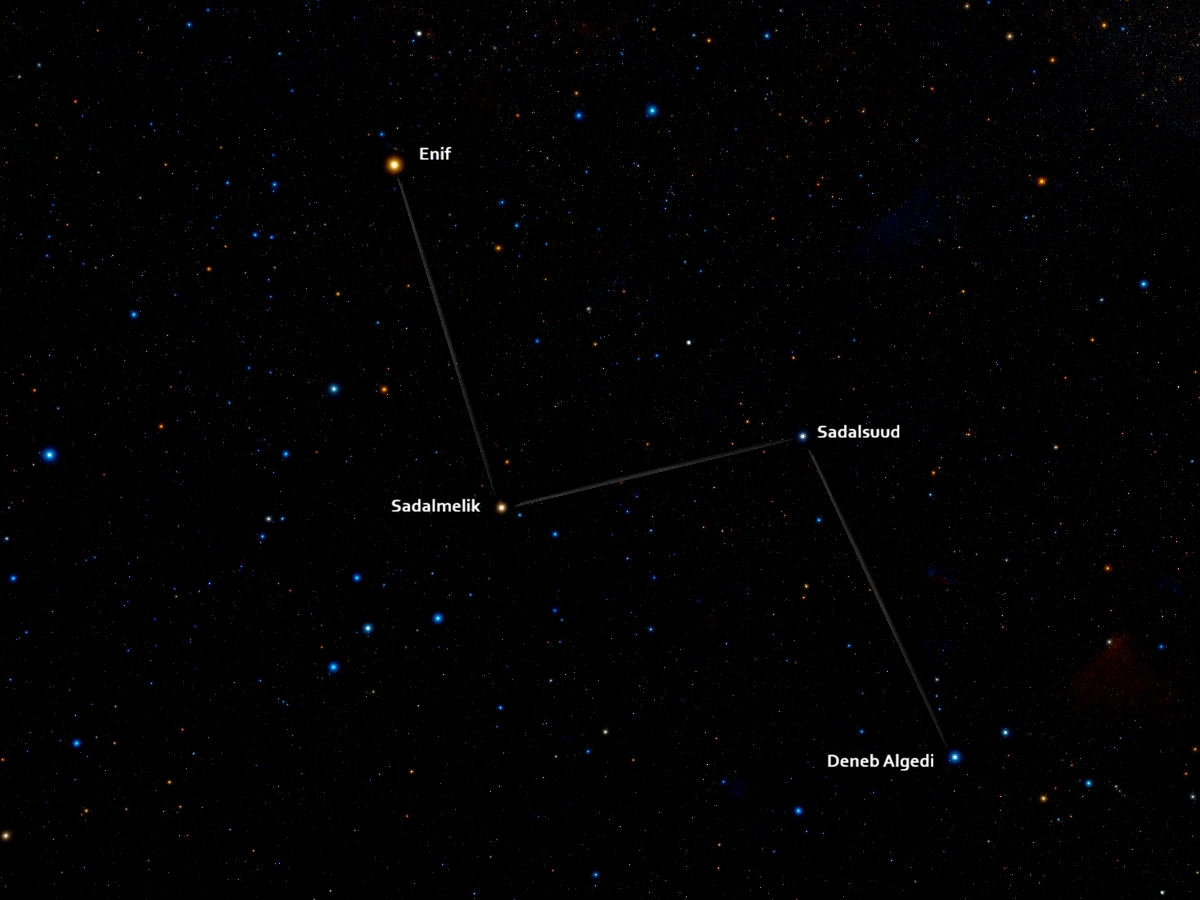
Lightning Bolt stars, image credit: ESO/Digitized Sky Survey 2 (CC BY 4.0)
The three stars are not gravitationally bound but astronomers believe that they are members of the same loose OB association. An OB association is a loose group of massive blue stars born from the same cloud of gas. These stars started their lives as hot blue B-type stars and evolved away from the main sequence quickly because of their large mass. Over tens of millions of years, the stars drifted apart but still appear in the same area of the sky when seen from Earth.
Deneb Algedi, on the other hand, is still on the main sequence even though it is much older than the supergiant trio. It lies 38.70 light years away while the other three are over 500 light-years away.
| Star name | Enif | Sadalmelik | Sadalsuud | Deneb Algedi |
| Bayer designation | ε Pegasi | α Aquarii | β Aquarii | δ Capricorni |
| Constellation | Pegasus | Aquarius | Aquarius | Capricornus |
| Right ascension | 21h 44m 11.16s | 22h 05m 47.04s | 21h 31m 33.53s | 21h 47m 02.44s |
| Declination | +09° 52′ 30″ | -00° 19′ 11.46″ | -05° 34′ 16.23″ | -16° 07′ 38.23″ |
| Spectral type | K2 Ib–II | G2 Ib | G0 Ib | A7m III |
| Apparent magnitude | 2.4 | 2.942 | 2.87 | 2.81 |
| Distance (ly) | 690 ± 20 | 691.1 | 541.8 | 38.7 |
| Mass (M☉) | 11-12 | 6.31 | 4.97 – 6.3 | 1.54 |
| Radius (R☉) | 183 | 70 | 47.88 | 1.87 |
| Luminosity (L☉) | 8,508 | 3,917 | 2,046 | 8.5 |
| Temperature (K) | 4,100 | 5,190 | 5,608 | 7,000 |
| Age | 20 Myr | 53 Myr | 56 – 110 Myr | 1.4 Gyr |
Enif (Epsilon Pegasi): The horse’s muzzle
Enif, the brightest star in the Lightning Bolt, is the lucida of Pegasus and ranks, on average, as the 82nd brightest star in the night sky. With 11-12 times the Sun’s mass, the star is destined to go out as a supernova in the relatively near future. In the constellation figure of Pegasus, it marks the winged horse’s nose and appears southwest of the Great Square asterism, which outlines the horse’s main body. The name Enif comes from the Arabic word for “nose.”
Enif is the coolest and most luminous of the four stars, as well as the youngest, with an estimated age of only 20 million years. Despite its young age, it will be the first to go because it is much more massive than its supergiant neighbours Sadalsuud and Sadalmelik. It has only a few million years left before it lights up the northern autumn sky as a luminous supernova.
Sadalmelik (Alpha Aquarii): The lucky star of the king
Sadalmelik belongs to the rare class of yellow supergiants. It lies 691.1. light-years away and shines with a luminosity of around 3,917 Suns. It is one of the several stars with “lucky” names, originating in old Arabic astronomy. Its name means “the lucky star of the king.”
Like Enif, Sadalmelik is a behemoth, but has more modest parameters. With a mass 6.31 times that of the Sun, it is not massive enough to go out as a supernova. It will instead end its life as a massive white dwarf surrounded by a bright planetary nebula.
Sadalmelik has expanded to a size of 70 solar radii. It is slightly older than Enif, with an estimated age of 53 million years, but younger than its brighter Aquarius neighbour Sadalsuud.
Sadalsuud (Beta Aquarii): The luckiest of the lucky
Sadalsuud, the brightest star in Aquarius, is a yellow supergiant with the spectral type G0 Ib. Shining at magnitude 2.87, it is on average only the 158th brightest star in the sky. The star’s traditional Arabic name means “the luck of lucks.”
Sadalsuud has an estimated mass of 4.97 – 6.3 solar masses and a radius 47.88 times that of the Sun. With an effective temperature of 5,608 K, it is around 2,046 times more luminous than our parent star. It is believed to be a little older than Sadalmelik and Enif, with age estimates in the range between 56 and 110 million years.
Deneb Algedi (Delta Capricorni): The tail of the Sea Goat
Deneb Algedi, the lucida of Capricornus, marks the celestial Sea Goat’s tail. It is one of the several bright Denebs (tail stars) in the sky, along with Deneb in Cygnus, Denebola in Leo, Deneb Kaitos (Diphda) in Cetus, Deneb el Okab (Okab) in Aquila, and Aldhanab in Grus.
With an apparent magnitude of 2.81, Deneb Algedi is on average the 145th brightest star in the sky. Located only 38.70 light years away, it is the nearest of the four Lightning Bolt stars to the Sun.
Deneb Algedi presents as a giant star and has the spectral class A7m III, but is in fact still on the main sequence, fusing hydrogen into helium in its core. It is a chemically peculiar star, hotter, larger and more luminous than the Sun, with an estimated age of 1.4 billion years.
Delta Capricorni is the only binary star in the visual grouping. It has a smaller companion and the two stars form an Algol-type eclipsing binary system, meaning that they periodically eclipse each other and the eclipses cause the system’s brightness to drop by 0.24 or 0.09 magnitudes. The Delta Capricorni system is the nearest eclipsing binary star to the Sun.
Deep sky objects near the Lightning Bolt
The Lightning Bolt stars can be used to locate several bright deep sky objects that appear in their host constellations. These bright star clusters and nebulae can be observed in binoculars and small telescopes.
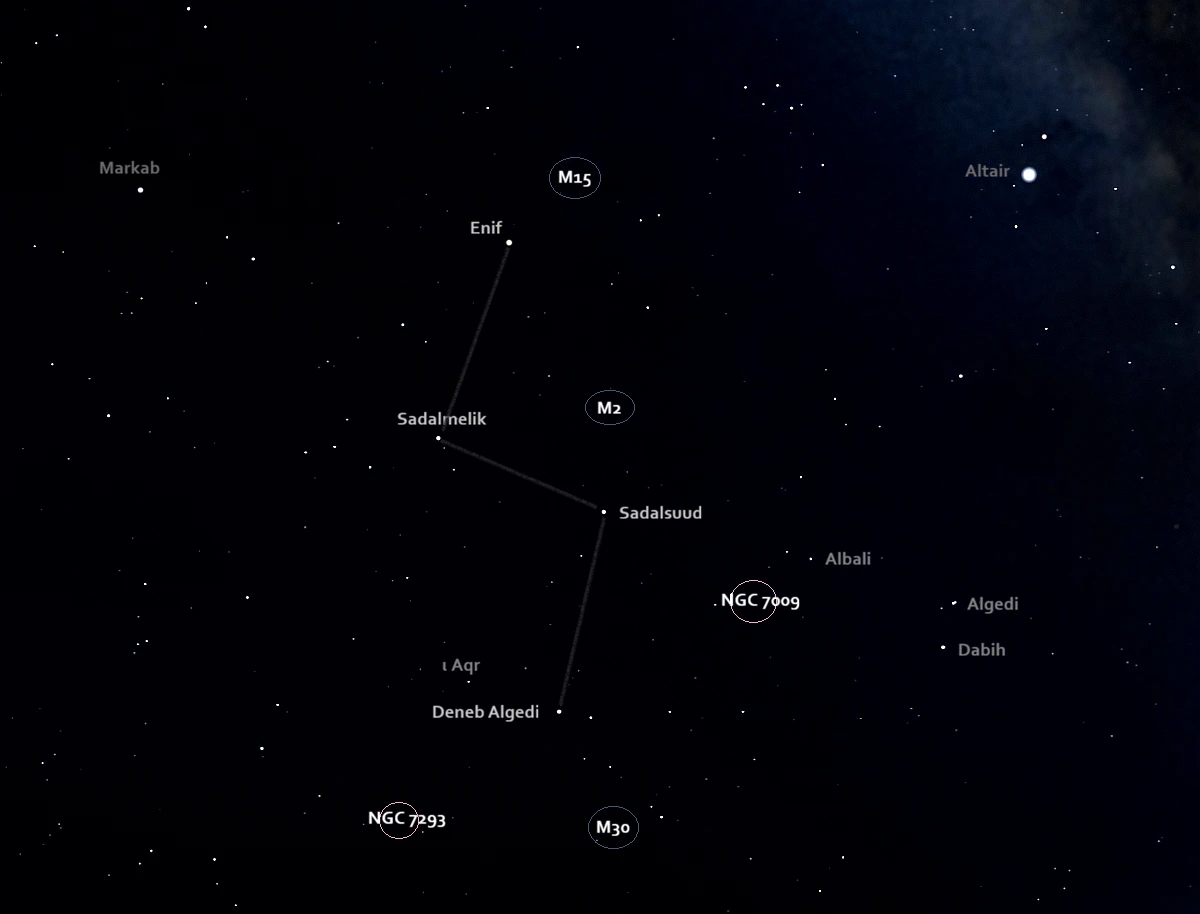
Deep sky objects near the Lightning Bolt, image: Stellarium (annotated for this article)
Great Pegasus Cluster (M15)
Enif can be used to find the bright globular cluster Messier 15 (the Great Pegasus Cluster). The massive ancient cluster appears about four degrees west-northwest of the supergiant, in the direction of Gamma Delphini, the star system that marks the nose of Delphinus.
The Great Pegasus Cluster has an apparent magnitude of 6.2 and an apparent size of 18 arcminutes. It appears as a fuzzy stellar object in binoculars, and its brightest stars can be resolved in 6-inch telescopes.
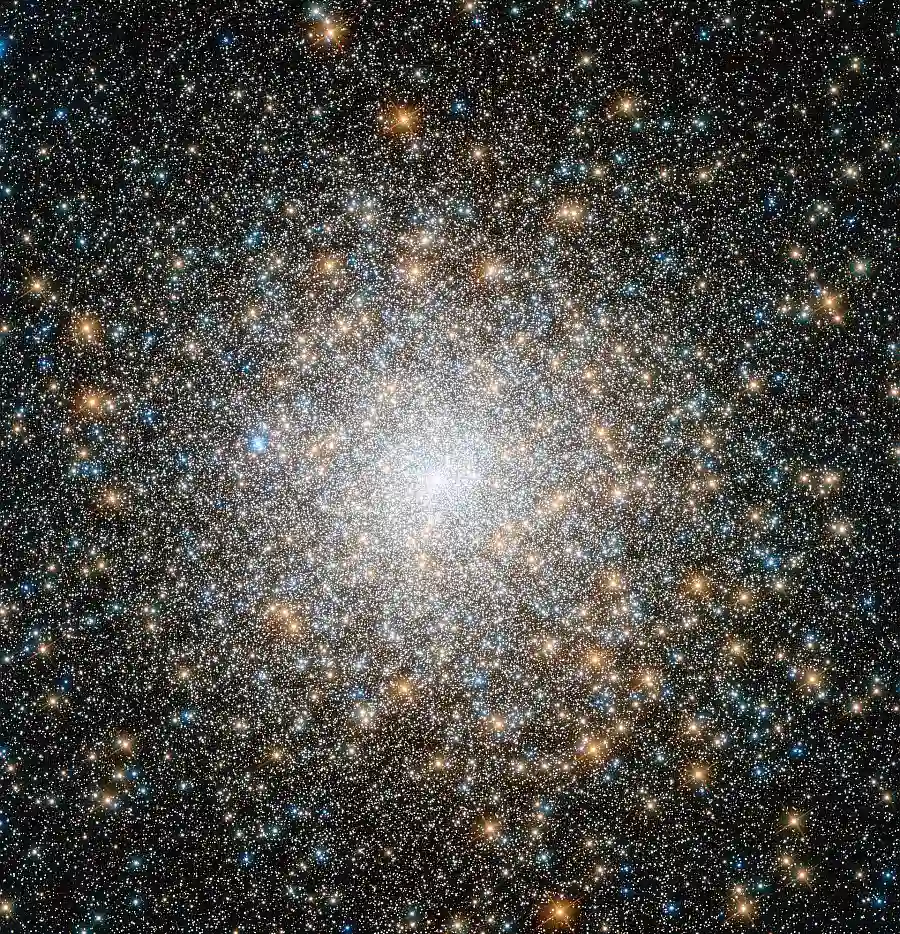
Great Pegasus Cluster (M15), image credit: NASA, ESA/Hubble (CC BY 3.0)
Messier 2
The globular cluster Messier 2 appears about 5 degrees north of Sadalsuud. It can be found using Sadalmelik and the stars of the Water Jar. A line extended from Zeta Aquarii, the central star of the Water Jar, through Sadalmelik leads to the cluster.
Messier 2 is slightly smaller and fainter than M15. It shines at magnitude 6.5 and has an angular size of 16 arcminutes. Like most Messier objects, it can be spotted in binoculars or a small telescope, but its brightest stars can only be resolved in larger instruments.
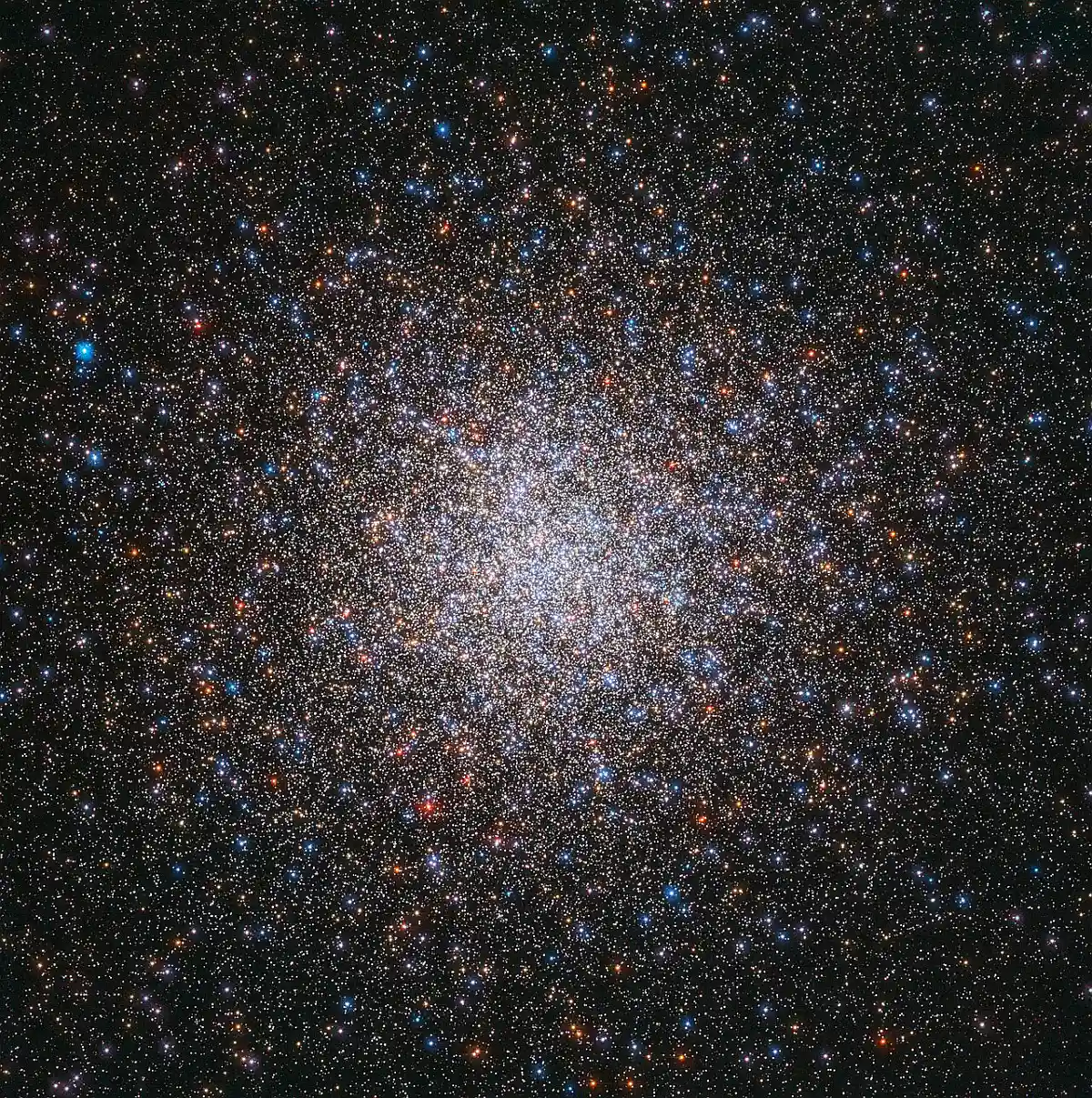
Messier 2, image credit: ESA/Hubble & NASA, G. Piotto et al. (CC BY 4.0)
Saturn Nebula (NGC 7009)
The Saturn Nebula, one of the brightest planetary nebulae in the sky, lies along the line drawn from Deneb Algedi to the fainter Albali. Albali is the brightest star in the area between Sadalsuud and Algedi, the star at the tip of the left part of the V of Capricornus.
The Saturn Nebula shines at magnitude 8 from a distance of 2,000 – 4,000 light-years and can be observed in small telescopes. It is listed as Caldwell 55 in the Caldwell catalogue of deep sky objects visible in amateur telescopes.
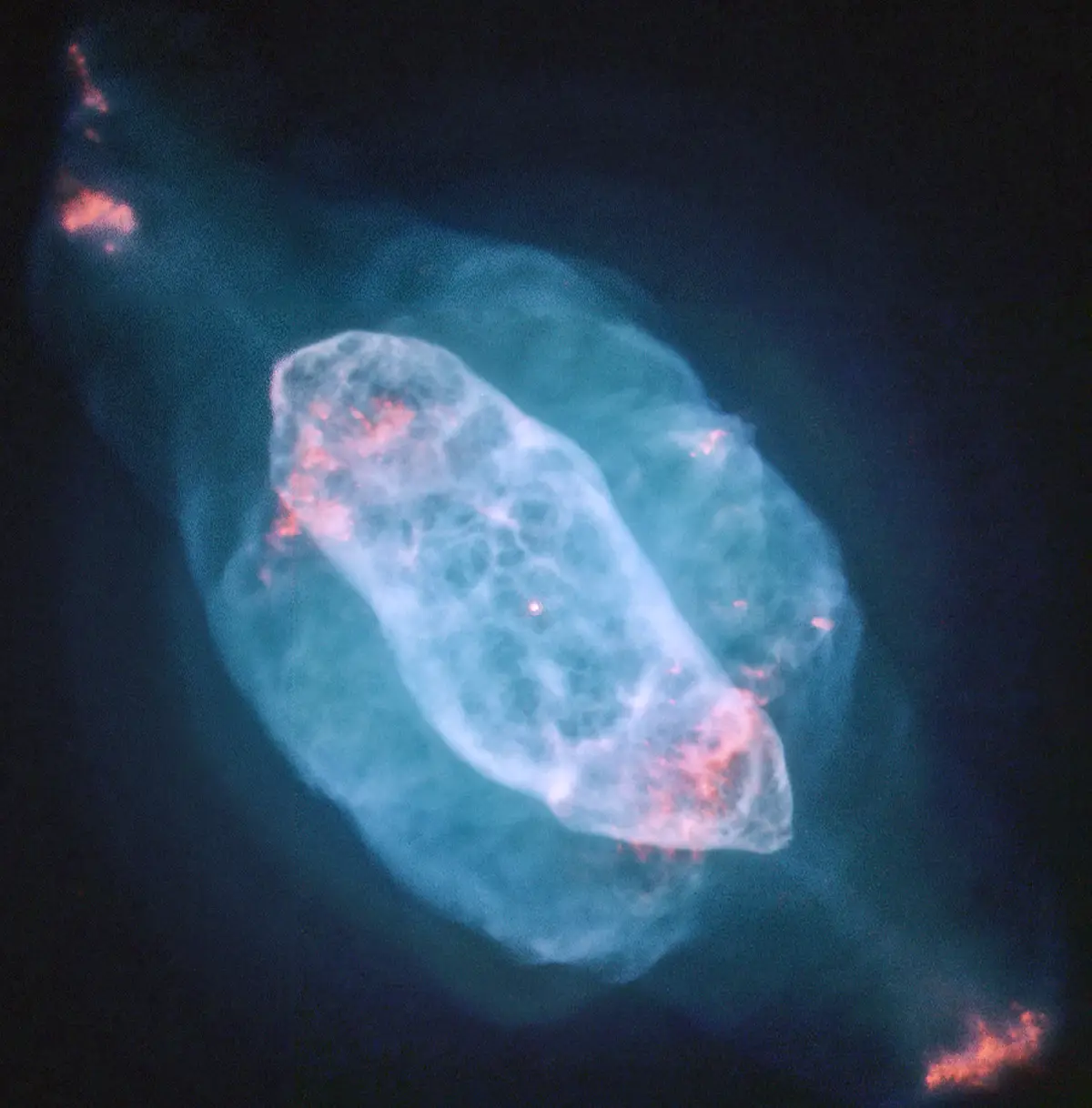
Saturn Nebula, image credit: Judy Schmidt (CC BY 2.0)
Messier 30
Messier 30, popularly known as the Jellyfish Cluster, is a magnitude 7.2 globular cluster in Capricornus. It lies south-southwest of Deneb Algedi, a little less than halfway from the bright Fomalhaut in Piscis Austrinus to Dabih in Capricornus. The cluster is visible in small binoculars.
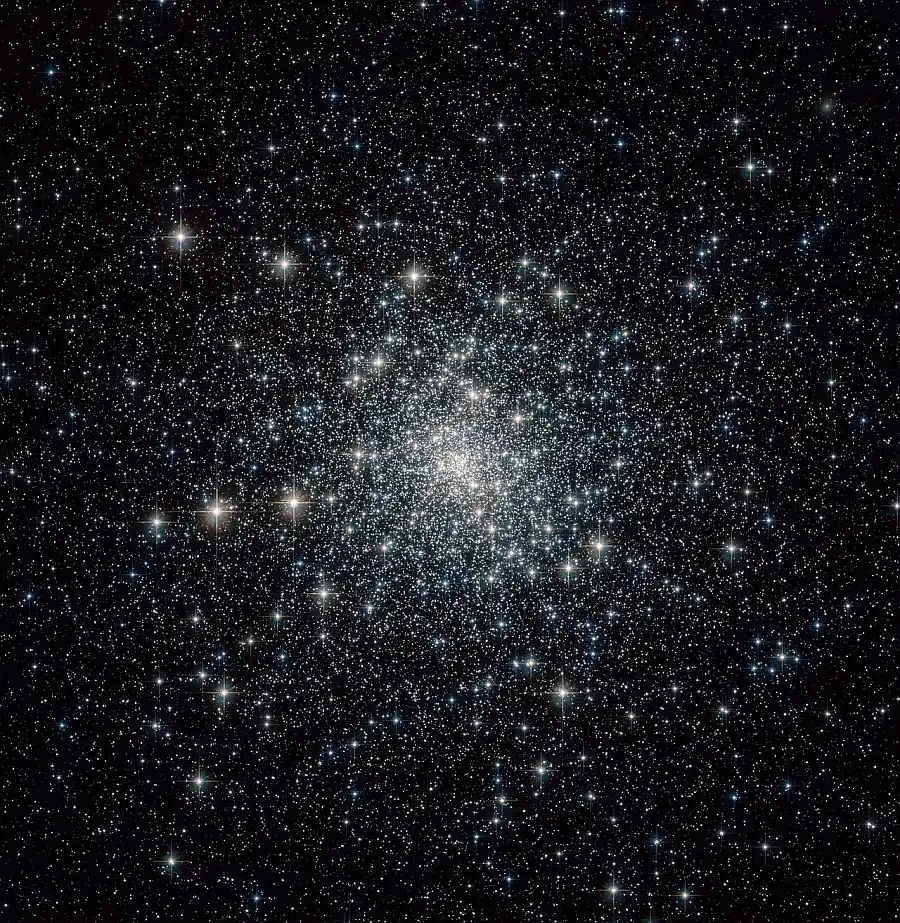
Messier 30, image credit: ESA/Hubble (M. Kornmesser) (CC BY 4.0)
Helix Nebula (NGC 7293)
The Helix Nebula (Caldwell 63), one of the brightest and best-known planetary nebulae in the sky, appears just northeast of the midpoint of the imaginary line connecting Deneb Algedi and Fomalhaut. It can be found about halfway between Fomalhaut and Iota Aquarii.
With an apparent size of 25 arcminutes, the bright nebula is easily visible in binoculars in clear, dark skies. It lies approximately 2,870 light-years away.
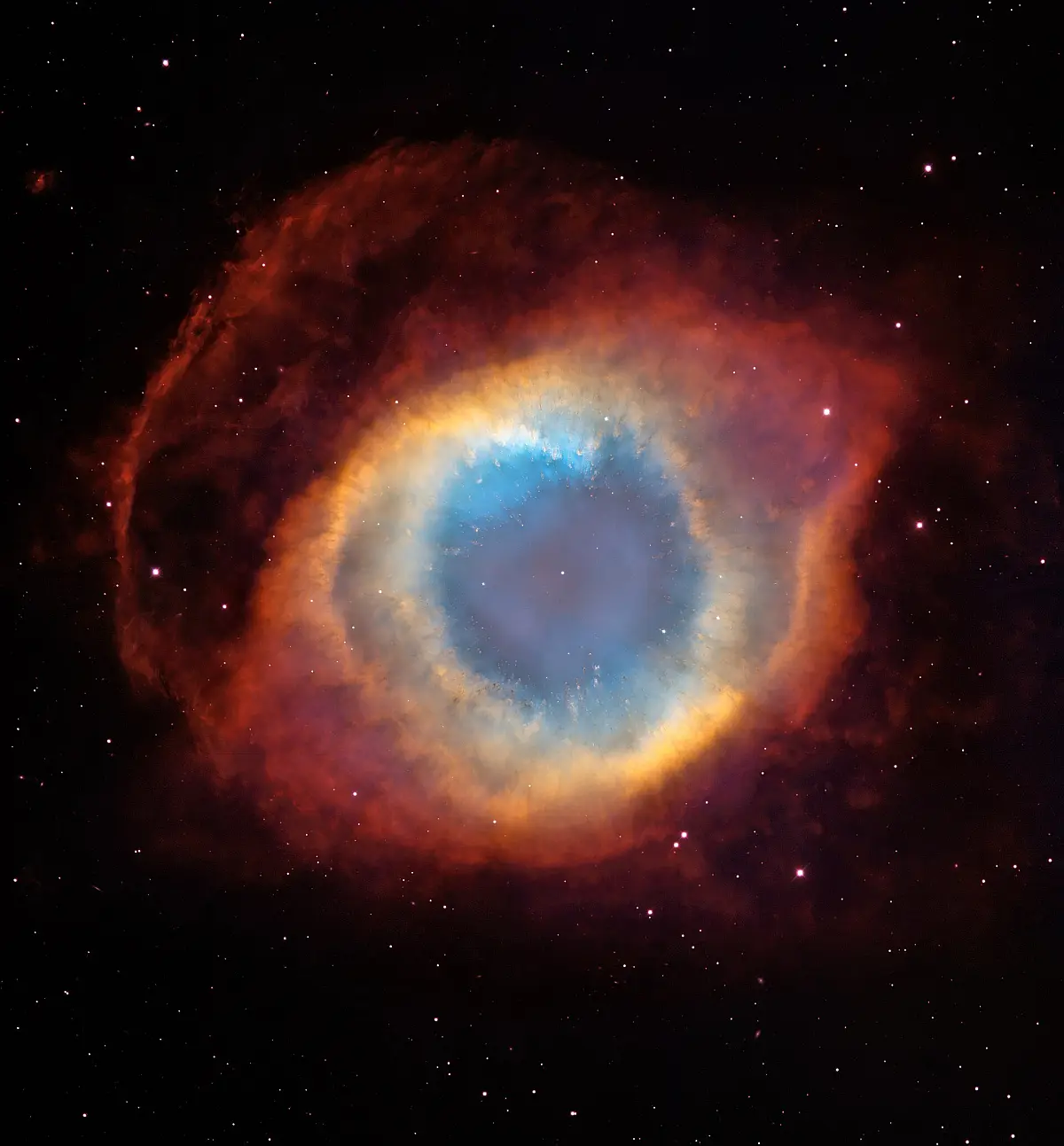
Helix Nebula, image credit: NASA, ESA, C.R. O’Dell (Vanderbilt University), and M. Meixner, P. McCullough, and G. Bacon ( Space Telescope Science Institute) (CC BY 4.0)