Westerlund 1 (Wd1) is a massive super star cluster located approximately 12,000 light years away in the southern constellation Ara (the Altar). It is the most massive young open cluster known in the Milky Way galaxy and the nearest super star cluster to the Sun. Also known as the Ara Cluster, it contains some of our galaxy’s largest and most massive stars.
Massive star clusters like Westerlund 1 play a key role in the evolution of galaxies. Their massive members provide a crucial source of ionizing ultraviolet radiation and chemical enrichment that affects the future generations of stars in the region.
Astronomers believe that super star clusters like Wd1 were sites where most of the star formation in the Milky Way took place when our galaxy was much younger and when most of its stars formed. This makes the young cluster an excellent target for studying star formation and evolution in densely packed starburst regions similar to those that existed in an earlier era of the universe.
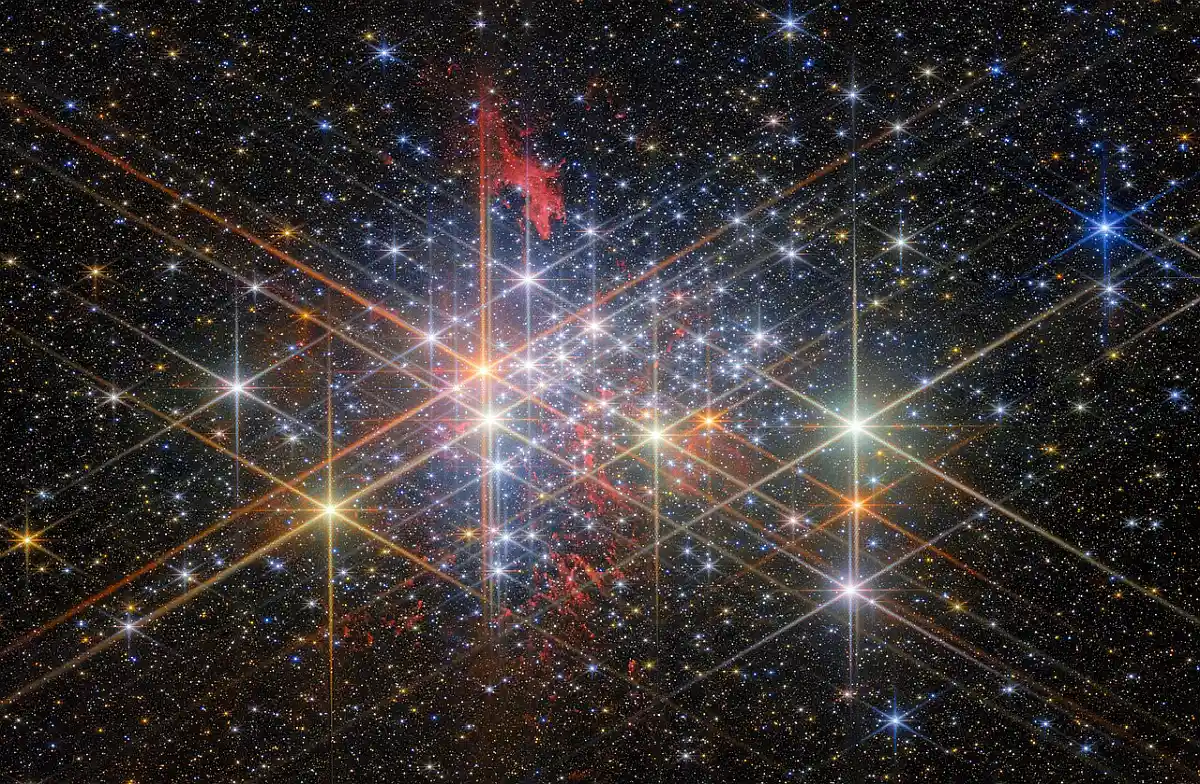
This image captures the vibrant and intense activity within the Westerlund 1 star cluster, one of the most massive young star clusters in the Milky Way galaxy. The data for this breathtaking view was obtained through the NIRCam of the JWST. Distinctive features include numerous bright stars and intricate nebular structures, illuminated by the high-energy radiation from the cluster’s massive stars. Image processing by Daniel Capela, based on data from the proposal led by Gennaro et al. 2021. Credit: ESA/NASA/CSA/D.Capela (CC BY-SA 4.0)
Young cluster that challenges stellar physics
Westerlund 1 packs a mass of 63,000 solar masses into an area only 6.5 light-years across. It has an estimated age of only 5.5 million years. Even though its members have record-breaking properties, the absence of supernovae in Wd1 has puzzled astronomers for decades. Only one supernova remnant has been detected in the cluster, the Westerlund 1 magnetar.
Astronomers believe that Westerlund 1 will eventually become a globular cluster, a dense conglomeration of gravitationally bound stars that stay together for a very long time.
How massive is Westerlund 1?
Westerlund 1 is the most massive cluster known in the Milky Way. It is one of the few star clusters known with a mass of over 10,000 solar masses. Others include the Arches Cluster, the Quintuplet Cluster and the Central Cluster in the region of the Galactic centre.
With a mass of 63,000 Suns, Westerlund 1 dwarfs the clusters Trumpler 14 (4,300 M☉) and Trumpler 16 (4,000 M☉) in the Carina Nebula, as well as the Quintuplet Cluster (10,000 M☉) and the Arches Cluster (20,000 M☉). Even the red supergiant clusters RSGC1 (30,000 M☉), Stephenson 2 (30,000-50,000 M☉) and RSGC3 (20,000 M☉) in the constellation Scutum do not come close.
The Ara Cluster is also a top contender for the title of the most massive young cluster in the Local Group of galaxies. It is believed to be more massive than NGC 346 (50,000 M☉) in N66, the largest stellar nursery in the Small Magellanic Cloud. However, it is in all likelihood not as massive as R136 in the Large Magellanic Cloud (90,000 M☉).
R136 resides in the Tarantula Nebula, one of the largest H II regions in the Local Group. It is home to R136a1, currently the most massive and luminous star known. Estimates of the young cluster’s mass are in the range from 90,000 to 450,000 Suns.
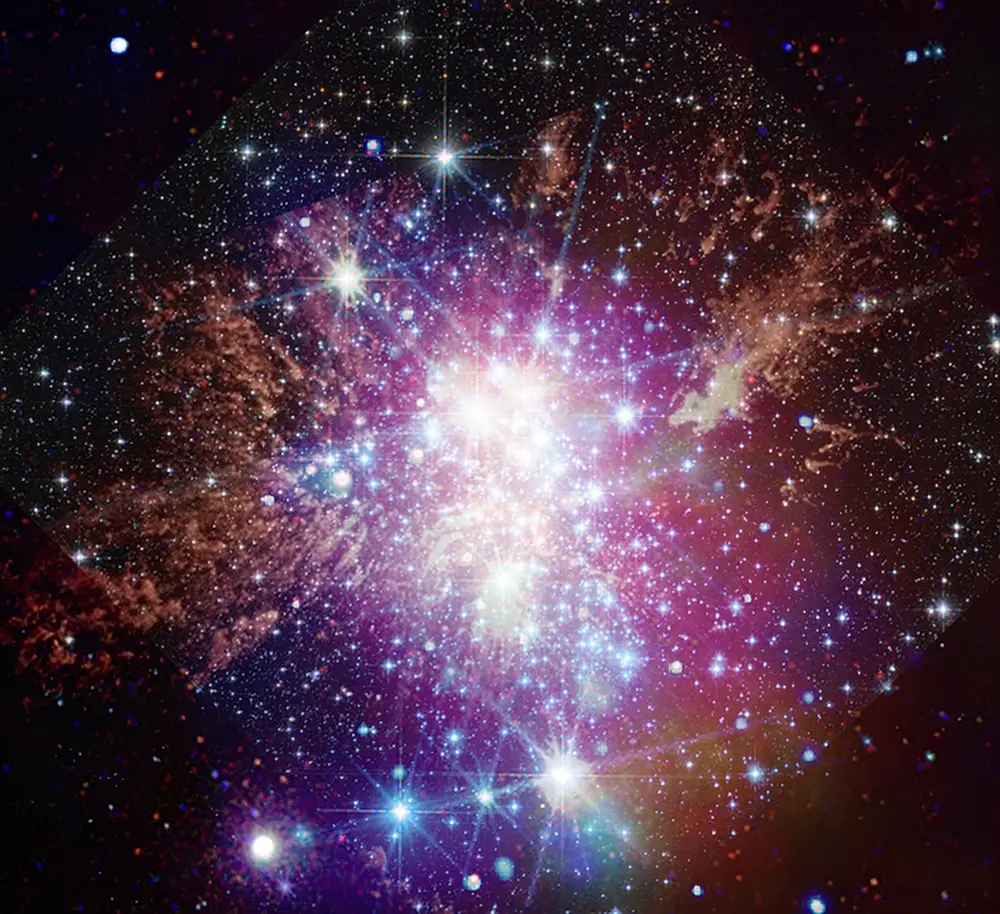
Westerlund 1, the biggest and closest “super” star cluster to Earth, dazzles in this image released on July 23, 2025. This view combines x-ray data from NASA’s Chandra X-ray Observatory (in pink, blue, purple, and orange), infrared data from NASA’s James Webb Space Telescope (in yellow, gold, and blue), and optical data from NASA’s Hubble Space Telescope (in cyan, grey, and light yellow). Data from Chandra and other telescopes is helping astronomers delve deeper into this galactic factory where stars are vigorously being produced. Observations from Chandra have uncovered thousands of individual stars pumping out X-ray emission into the cluster. This image is part of a compilation of images featuring data from Chandra along with a host of other telescopes. Image credit: X-ray: NASA/CXC/SAO; Optical: NASA/ESA/STScI; IR: NASA/ESA/CSA/STScI; Processing: NASA/CXC/SAO/L. Frattare (PD)
Obscured by interstellar dust and gas
Even though its members are exceptionally luminous, the Ara Cluster is obscured by a huge interstellar cloud of dust and gas that is connected to the cluster itself.
In 2007, Kothes et al. proposed that a large interstellar bubble about 50 parsecs across was produced by the cluster members in the early stages of evolution. The bubble has a similar dynamic age to the cluster’s estimated age.
The dark clouds associated with the Scutum-Crux arm likely contribute to the extinction. Estimates of the average extinction towards the cluster range from 10 to 12 magnitudes.
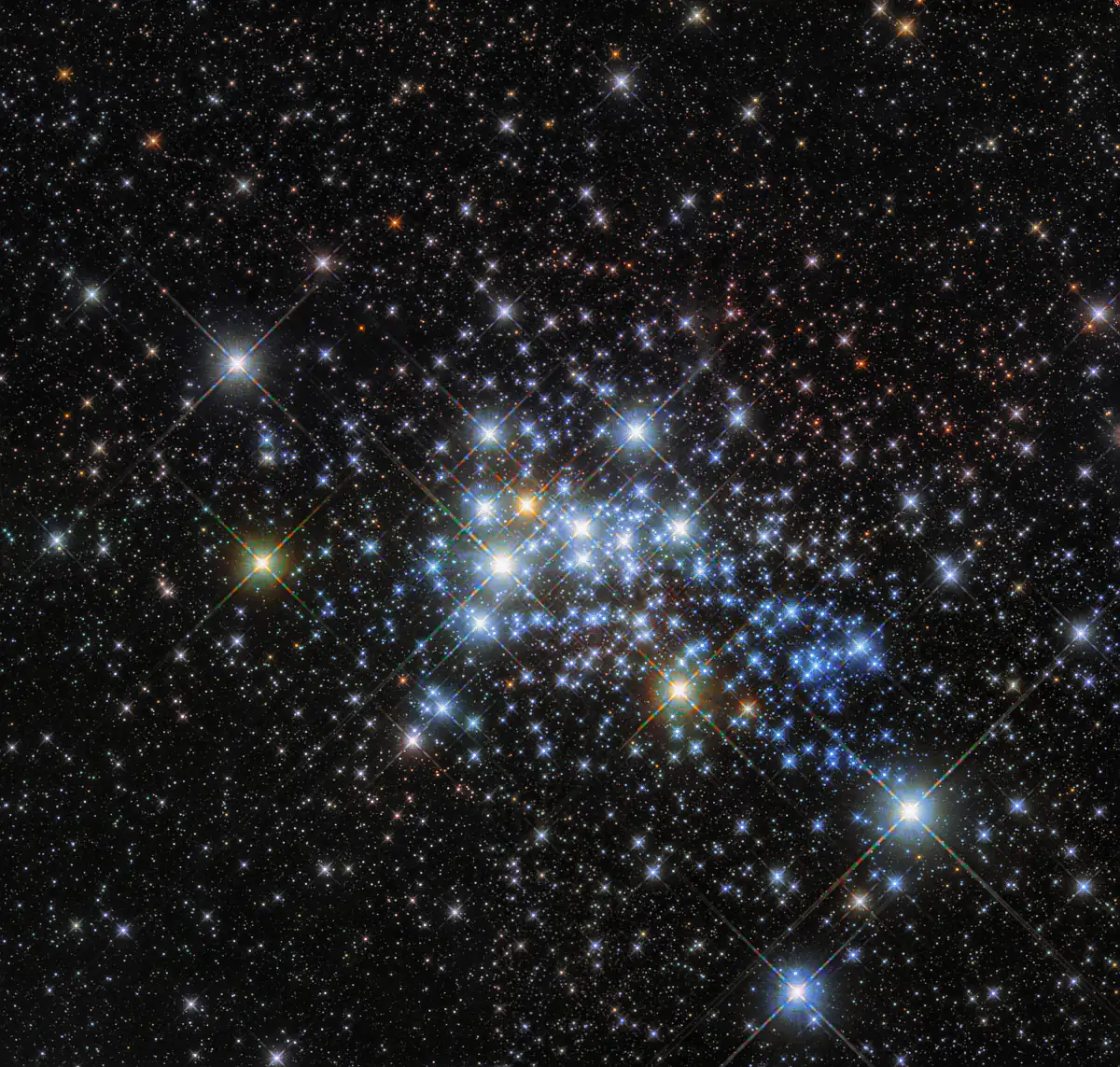
Light travels through space at just under 300 000 kilometres per second! This staggering speed is used to calculate astronomical distances; although often misinterpreted as a unit of time (due to its misleading name), a light-year is actually a unit of astronomical distance, and is defined as the distance that light travels in a year. For reference, this is around nine trillion kilometres… but it’s a little tricky to visualise! With this in mind, 15 000 light-years may sound like a truly huge distance, but compared to the vastness of the cosmos, it’s really quite nearby. In fact, an object sitting 15 000 light-years away would not even be outside our home galaxy, the Milky Way. This is roughly the distance between us and a young super star cluster known as Westerlund 1, home to one of the largest stars ever discovered. Stars are classified according to their spectral type, surface temperature, and luminosity. While studying and classifying the cluster’s constituent stars, astronomers discovered that Westerlund 1 is home to one of the largest stars ever discovered, originally named Westerlund 1-26. It is a red supergiant (although sometimes classified as a hypergiant) with a radius over 1500 times that of our Sun. If Westerlund 1-26 were placed where our Sun is in our Solar System, it would extend out beyond the orbit of Jupiter. Most of Westerlund 1’s stars are thought to have formed in the same burst of activity, meaning that they have similar ages and compositions. The cluster is relatively young in astronomical terms —at around three million years old it is a baby compared to our own Sun, which is some 4.6 billion years old. Image credit: ESA/Hubble & NASA (CC BY 4.0)
The age of Westerlund 1
The stars of Westerlund 1 have similar compositions and are thought to have formed in a single burst of star formation. However, the broad age spread of the members may indicate multiple episodes of star formation in the cluster.
Westerlund 1 is between 3 and 7.5 million years old. The presence of a pulsar indicates that the cluster is at least 3 million years old. Age estimates based on the post-main sequence stars in the cluster suggest an age of around 5 million years, while those based on the study of pre-main sequence population indicate 3-5 million years, depending on the exact distance to the cluster.
The massive population of short-lived stars – Wolf-Rayet stars and yellow and red supergiants – constrains the cluster’s age to 4-5 million years. However, astronomers studying the lower-mass members have proposed an age of 3.5 million years.
In 2025, Wei et al. determined an age of 7.45 ± 0.53 million years and a distance of 3.7 ± 0.1 kiloparsecs based on observations with the Hubble Space Telescope (HST). The astronomers studied the structure and dynamics of the young cluster and identified a total of 10,346 members. They reported weak but detectable mass segregation in the cluster, a dynamical process by which more massive stars move towards the centre while less massive ones move towards the outskirts.
In 2026, a team led by R. Castellanos used infrared spectroscopy with the K-band Multi Object Spectrograph (KMOS) on the Very Large Telescope (VLT) to detect the main sequence members of the Ara Cluster for the first time. The team determined an age of 5.5 ± 1.0 million years at a distance of 4.23 kiloparsecs based on the main sequence turn-off (the point on the Hertzsprung-Russell diagram where stars begin to evolve away from the main sequence). The observations supported a single episode of star formation.
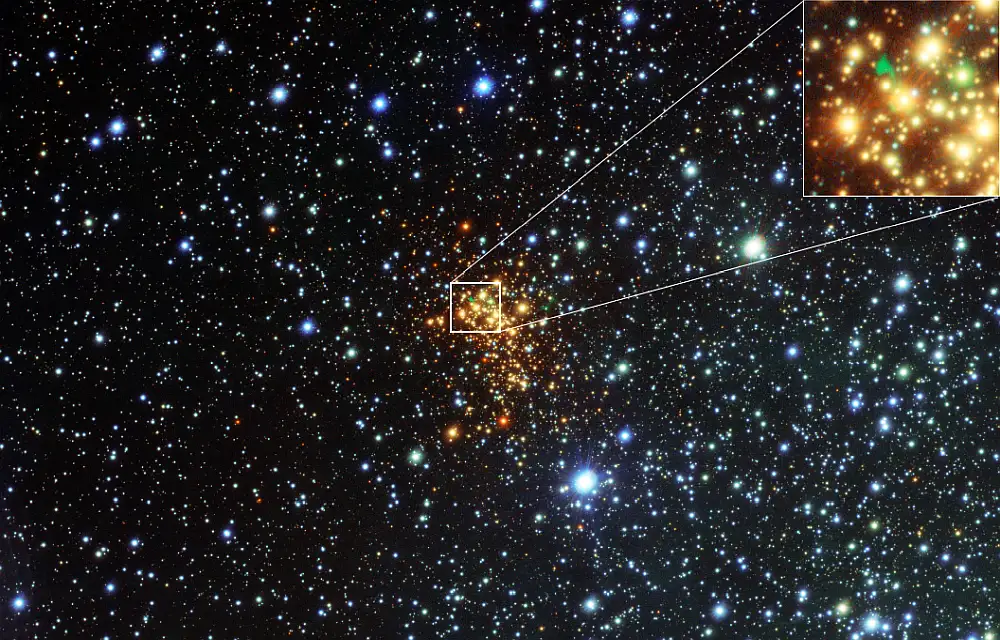
This picture from the VLT Survey Telescope (VST) at ESO’s Paranal Observatory shows the remarkable super star cluster Westerlund 1. This exceptionally bright cluster lies about 16 000 light-years from Earth in the southern constellation of Ara (The Altar). It contains hundreds of very massive and brilliant stars, all of which are just a few million years old — babies by stellar standards. But our view of this cluster is hampered by gas and dust that prevents most of the visible light from the cluster’s stars from getting to Earth. Now, astronomers studying images of Westerlund 1 from a new survey of the southern skies have spotted something unexpected in this cluster. Around one of the stars — known as W26, a red supergiant and possibly the biggest star known— they have discovered clouds of glowing hydrogen gas, shown as green features in this image. Such glowing clouds around massive stars are very rare, and are even rarer around a red supergiant— this is the first ionised nebula discovered around such a star. W26 itself would be too cool to make the gas glow; the astronomers speculate that the source of the ionising radiation may be either hot blue stars elsewhere in the cluster, or possibly a fainter, but much hotter, companion star to W26. Image credit: ESO/VPHAS+ Survey/N. Wright (CC BY 4.0)
Stars of Westerlund 1
The Ara Cluster contains a diverse, unusually massive and evolved population of young stars, including a significant number of rare stars with remarkable sizes and masses. The cluster has so many supernova candidates that, within several tens of millions of years, it will have hosted over 1,500 supernovae.
The members include 24 Wolf-Rayet stars, six rare yellow hypergiants, a luminous blue variable, four red supergiants, and hundreds of luminous, blue O- and B-type stars. Observations at X-ray wavelengths have also revealed an anomalous X-ray pulsar catalogued as CXOU J164710.2−455216, the brightest source of X-rays in the cluster.
Observations with the Chandra X-ray Observatory have revealed that over a thousand cluster members are crammed within 4 light-years of the cluster’s centre, comparable to the distance between the Sun and Proxima Centauri.
The brightest stars in Westerlund 1 are evolved, luminous post-main sequence stars with visual magnitudes of 14.5 to 18. These stars do not have long lives. Because of their high mass, they burn through their supply of fuel quickly and go out as supernovae within several million years.
The most massive members of Westerlund 1 had initial masses of more than 30 solar masses, implying ages of up to 5 million years for single stars and older if binary evolution is considered. These stars are reshaping their surroundings through their powerful stellar winds and intense radiation. Most of them are in close binary systems.
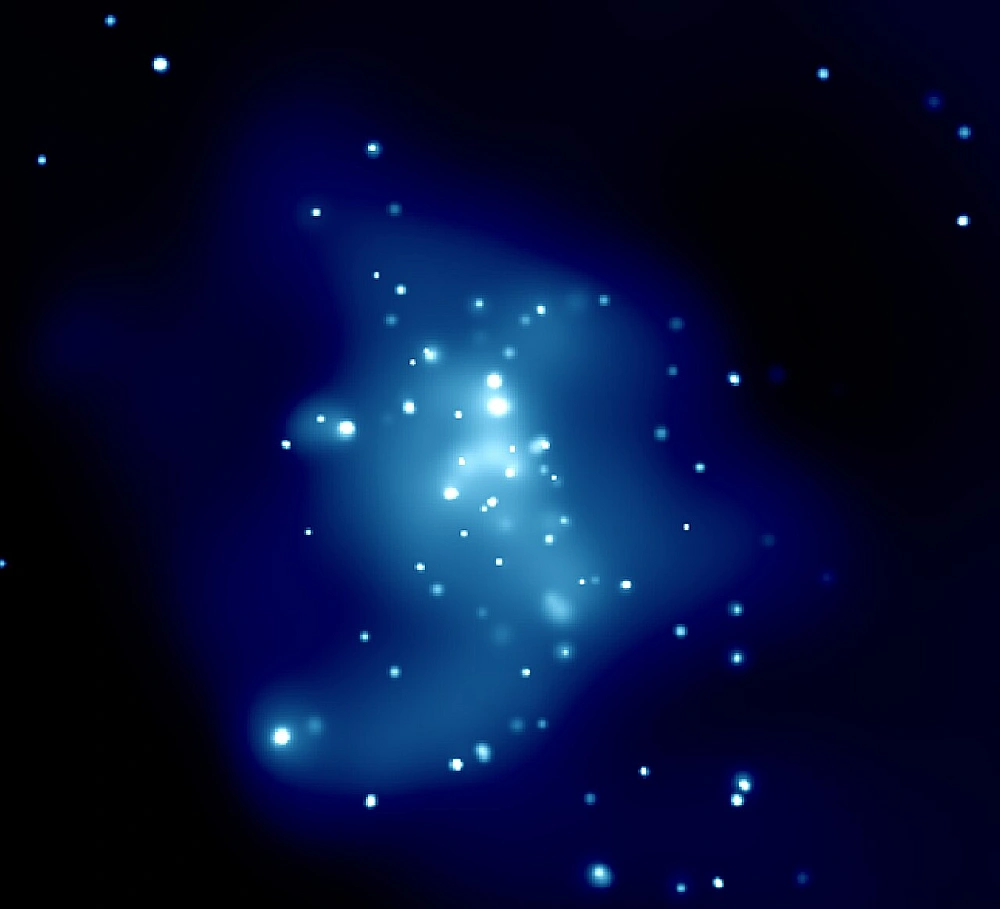
Several of the stars in Westerlund 1 have the mass of about 40 suns, which means that they will race through their evolution and form neutron stars or black holes in a few million years. A search of the cluster with Chandra found no evidence of black holes. However, astronomers did find a neutron star (CXO J164710.2-455216). Because such massive stars evolve more rapidly than less massive ones, and the progenitor of the neutron star has already gone out as a supernova, it must have had a mass greater than 40 suns. This discovery may severely limit the range of stellar masses that lead to the formation of stellar black holes. Image credit: NASA/CXC/UCLA/M.Muno et al., Smithsonian Institution (PD)
Brightest members
The cluster’s brightest members are the yellow hypergiants Westerlund 1-4 and Westerlund 1-32. These are rare, luminous stars with extended atmospheres that have lost much of their initial mass. They have apparent magnitudes of 14.47 and 15.05 and spectral types F3Ia+ and F5Ia+.
Other notable members include the red hypergiant Westerlund 1-26, the luminous blue variable Westerlund 1-243, the red supergiant Westerlund 1-20, the possible red supergiant Westerlund 1-237, the supergiant B[e] star Westerlund 1-9, and the magnetar CXOU J164710.2−455216.
Westerlund 1-26
Westerlund 1-26 is one of the brightest members of the Ara Cluster. The luminous cool supergiant or hypergiant is one of the largest stars known. It has a radius of 1,145 to 1,240 solar radii and shines with a luminosity of 275,000 – 288,000 Suns. It is believed to be only 7.9 million years old.
The behemoth is surrounded by a cometary-shaped nebula of ionized hydrogen. The glowing cloud extends 4.24 light-years from the star. It was discovered in 2013.
Even though it is obscured by 13 magnitudes of extinction, Westerlund 1-26 was once described as the single largest star known. Earlier estimates of the star’s radius were over 1,500 solar radii, similar to those given to later record-holders WOH G64 (1,540 R☉), VX Sagittarii (1,456 – 1,556 R☉), RSGC1-F01 (1,530 R☉), and VY Canis Majoris (1,420 R☉). Like Westerlund 1-26, these stars are red supergiants or hypergiants.
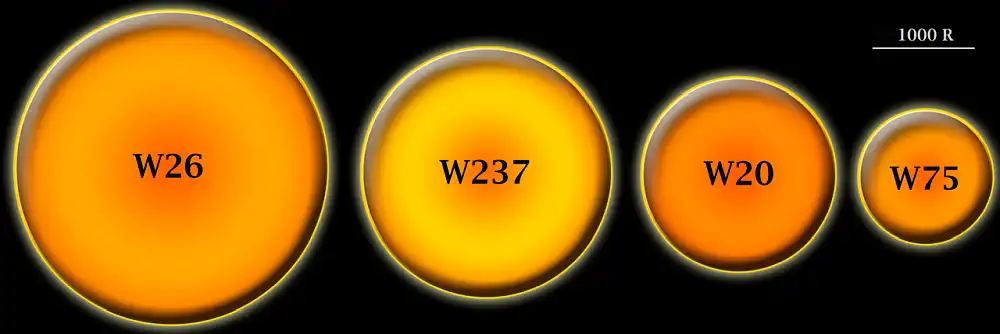
Comparison of the radii of four known supergiants located in the Westerlund 1 star cluster, in particular Westerlund 1-26, Westerlund 1-237, Westerlund 1-20, and Westerlund 1-75, image: Wikimedia Commons/MuCepheiBetelgeuse (CC BY 4.0)
Westerlund 1-243
Westerlund 1-243 is a luminous blue variable (LBV), an exceptionally rare type of massive star undergoing dramatic eruptive episodes. It lies on the outskirts of the Ara Cluster. It is the fourth visually brightest star in the cluster, after the yellow hypergiants Westerlund 1-4 and Westerlund 1-32, and the luminous blue supergiant Westerlund 1-33.
Westerlund 1-243 has a mass of 40 solar masses and a radius 376.9 times that of the Sun. With a luminosity 730,000 times that of the Sun, it is one of the cluster’s most luminous members.
Westerlund 1-20
Westerlund 1-20 has a radius of 858 solar radii and an energy output of 101,000 Suns. Placed at the centre of the solar system, the red supergiant would almost extend to the orbit of Jupiter. Like Westerlund 1-26, it is surrounded by a cometary-shaped nebula.
Westerlund 1-237
Westerlund 1-237 is another exceptionally large red supergiant in the cluster. It has an estimated radius 1,241 times that of the Sun and shines with 219,000 solar luminosities. It is surrounded by an elliptical nebula with a radius of 0.36 light-years.
The star’s membership in the cluster is uncertain because the distance estimates have a large margin of error. Wd 1-237 may lie closer to us, in which case it would be classified as a red giant.
Westerlund 1-9
Westerlund 1-9 is one of the most enigmatic members of the Ara Cluster. Classified as a sgB[e] star (supergiant B[e] star), the unusual star has been suspected of being the product of a stellar merger. It has an apparent magnitude of 17.47.
Westerlund 1-9 is embedded in a dusty cocoon, believed to have been produced in a recent eruption. The thick envelope leaves the star’s true nature difficult to determine.
In 2025, observations with Chandra revealed that Wd 1-9 was most likely a binary system composed of a Wolf-Rayet star and a massive OB star with an orbital period of 14 days. The system is believed to have recently undergone mass transfer and is surrounded by dense circumbinary material. The thick cocoon gives rise to the B[e] phenomenon and conceals the system’s true properties. Observations with the James Webb telescope also revealed an asymmetric outflow.
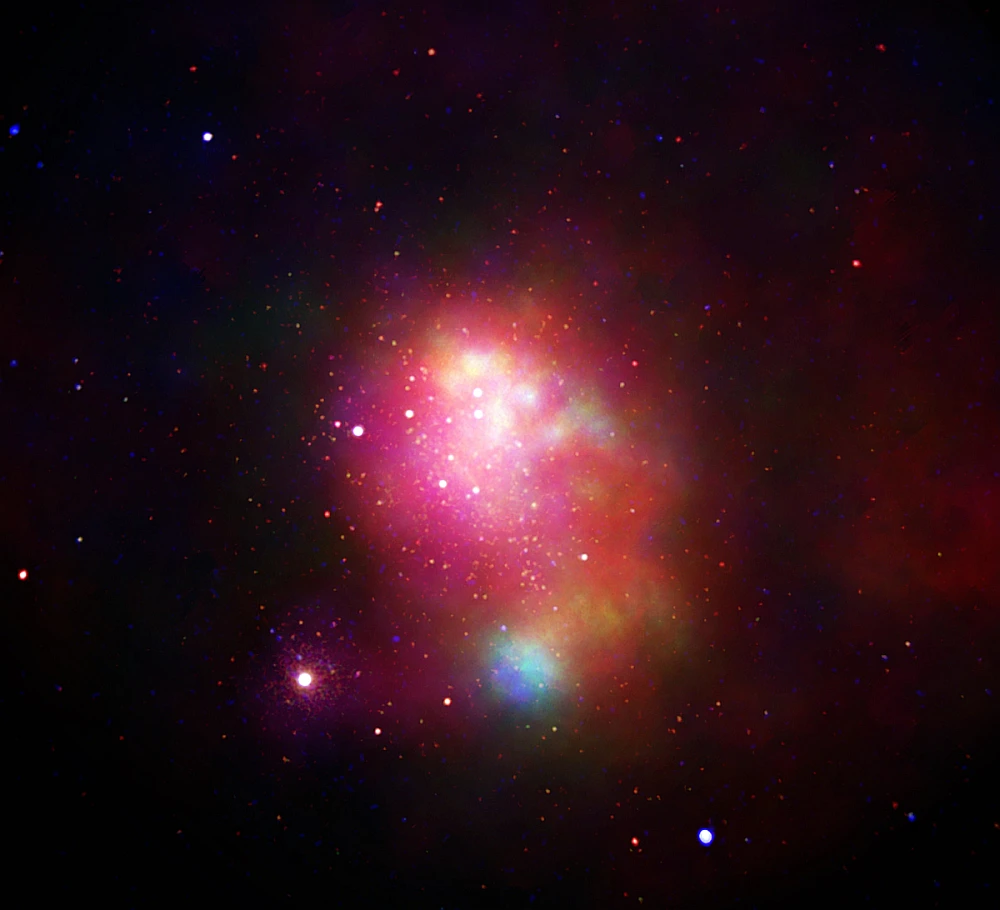
This image shows data from NASA’s Chandra X-ray Observatory. The X-rays show young stars (mostly represented as white and pink) as well as diffuse heated gas throughout the cluster (colored pink, green, and blue, in order of increasing temperatures for the gas). Credit – X-ray: NASA/CXC/INAF/M. Guarcello et al.; Image Processing: NASA/CXC/SAO/L. Frattare (PD)
CXOU J164710.2−455216
CXOU J164710.2−455216 is a magnetar – a neutron star with a strong magnetic field – discovered in 2005. It is the remnant of a star with a mass of over 40 solar masses that ended its life as a supernova.
In 2014, astronomers proposed that the magnetar formed in the interaction of two exceptionally massive stars in a very close orbit. The candidate companion was identified as the runaway star Westerlund 1-5.
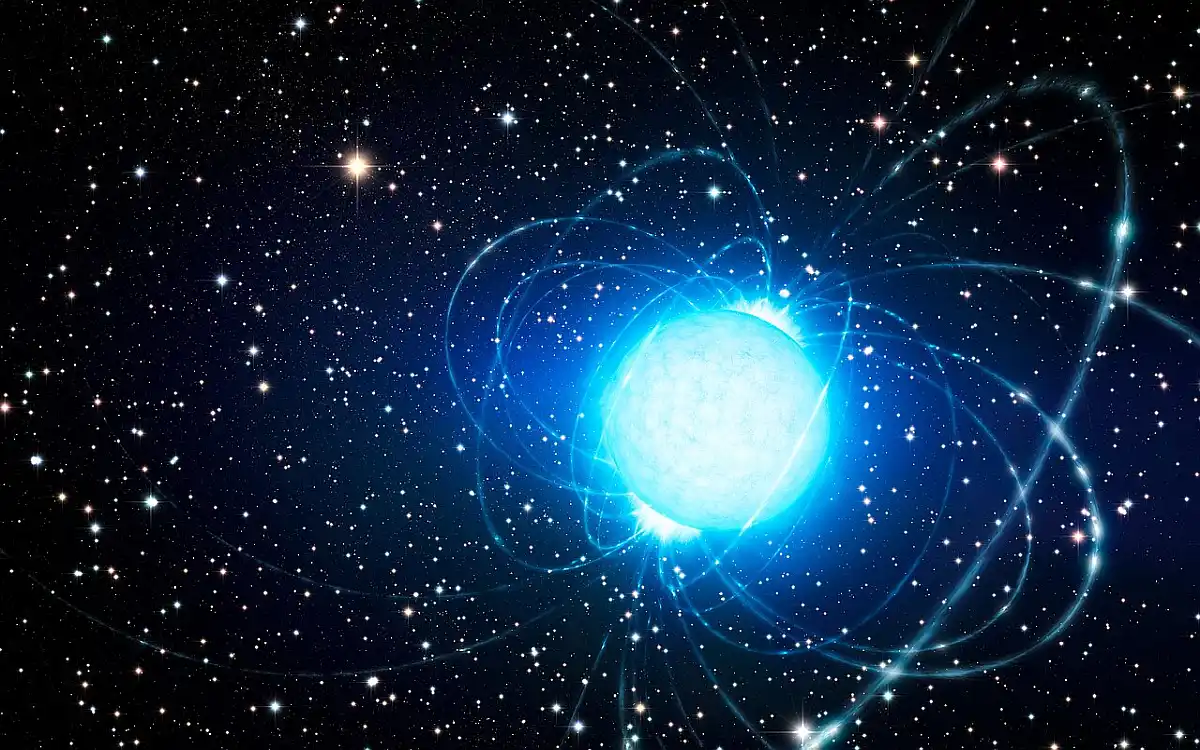
This artist’s impression shows the magnetar CXOU J164710.2-455216 in the very rich and young star cluster Westerlund 1. This remarkable cluster contains hundreds of very massive stars, some shining with a brilliance of almost one million suns. European astronomers have for the first time demonstrated that this magnetar — an unusual type of neutron star with an exceptionally strong magnetic field — probably was formed as part of a binary star system. The discovery of the magnetar’s former companion elsewhere in the cluster helps solve the mystery of how a star that started off so massive could become a magnetar, rather than collapse into a black hole. Image credit: ESO/L. Calçada (CC BY 4.0)
Discovery of the Ara Cluster
The Ara Cluster was discovered by the Swedish astronomer Bengt Westerlund during a survey of the southern Milky Way with the 20/26-inch Schmidt telescope at Uppsala Southern Station, Mount Stromlo Observatory, Canberra, Australia, in 1961. Westerlund reported the detection of a heavily reddened cluster with a visual absorption of 11.2 magnitudes.
The cluster was a challenging target for astronomers in the following decades because it is surrounded by enormous clouds of gas and dust that block the visible light from reaching ground-based telescopes. However, with the arrival of infrared and space-based telescopes, it became one of the most studied examples of a young super star cluster.
Location of Westerlund 1
Westerlund 1 appears in the region of the Fish Hook of Scorpius and can be located using the bright stars in the Scorpion’s tail. A line drawn from Kappa Scorpii through Eta Scorpii points in the direction of the cluster.
At declination -46°, the cluster never climbs above the horizon for observers north of the latitude 44° N.
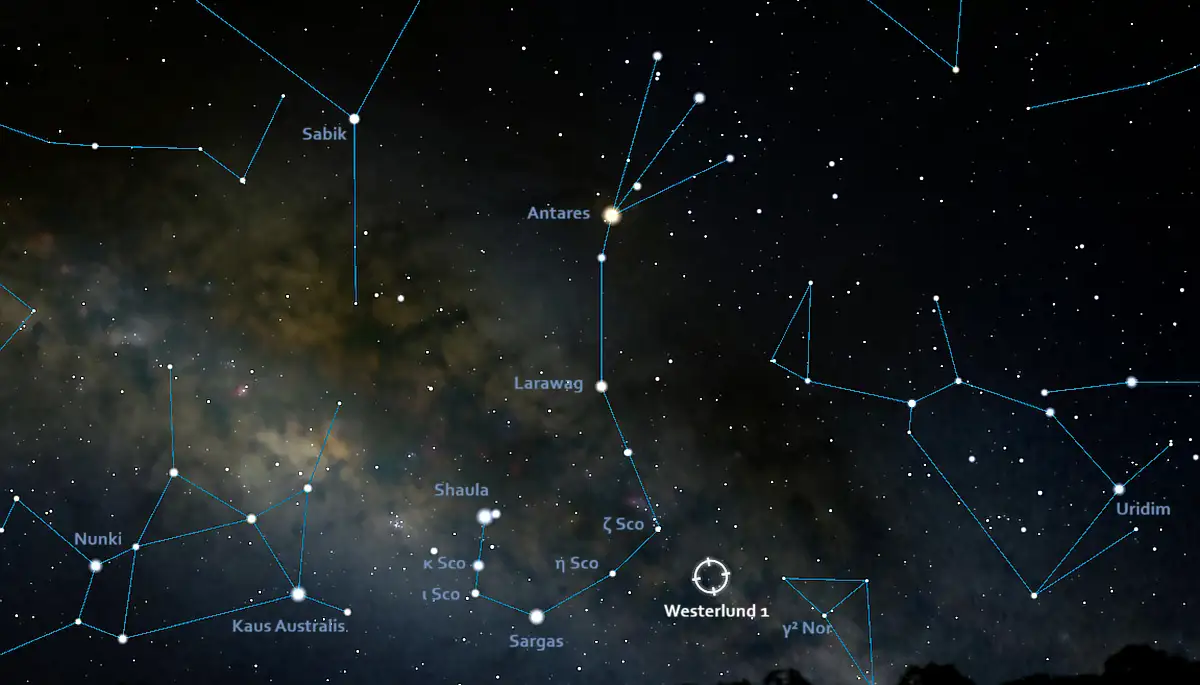
Westerlund 1 location, image: Stellarium (annotated for this article)
Explore other massive young clusters:
Ara Cluster – Westerlund 1
| Constellation | Ara |
| Object type | Open cluster |
| Right ascension | 16h 47m 02.4s |
| Declination | 45° 51′ 07″ |
| Apparent size | 3.00′ × 3.00′ |
| Distance | 12,329 light-years (8,480 – 13,796 ly); 3,780 parsecs (2,600 – 4,230 pc) |
| Size (radius) | 3.26 light-years |
| Mass | 63,000 M☉ |
| Age | 3.5 million years |
| Names and designations | Ara Cluster, Westerlund 1, Wd1, ESO 277-12, C 1644-457, IRAS 16434-4545, VDBH 197, TeV J1647-458, Villafranca O-033 |