NGC 1275 is a bright radio galaxy located approximately 225.19 million light years away in the constellation Perseus. It is associated with the radio source Perseus A (3C 84). With an apparent magnitude of 12.48 and an apparent size of 2.2 by 1.7 arcminutes, the galaxy can be observed in large amateur telescopes. It is listed as Caldwell 24 in the Caldwell catalogue.
Perseus A is the brightest galaxy in the Perseus Cluster (Abell 426), one of the most massive clusters of galaxies in the known universe. The galaxy lies at the centre of the cluster.
Perseus A is both a strong radio source and a strong emitter of X-rays. It is in fact two galaxies: a central supergiant elliptical galaxy of the type cD and a high velocity system that appears in front of it. The high velocity system is speeding towards the elliptical galaxy at 3,000 km/s and merging with the surrounding Perseus Cluster.
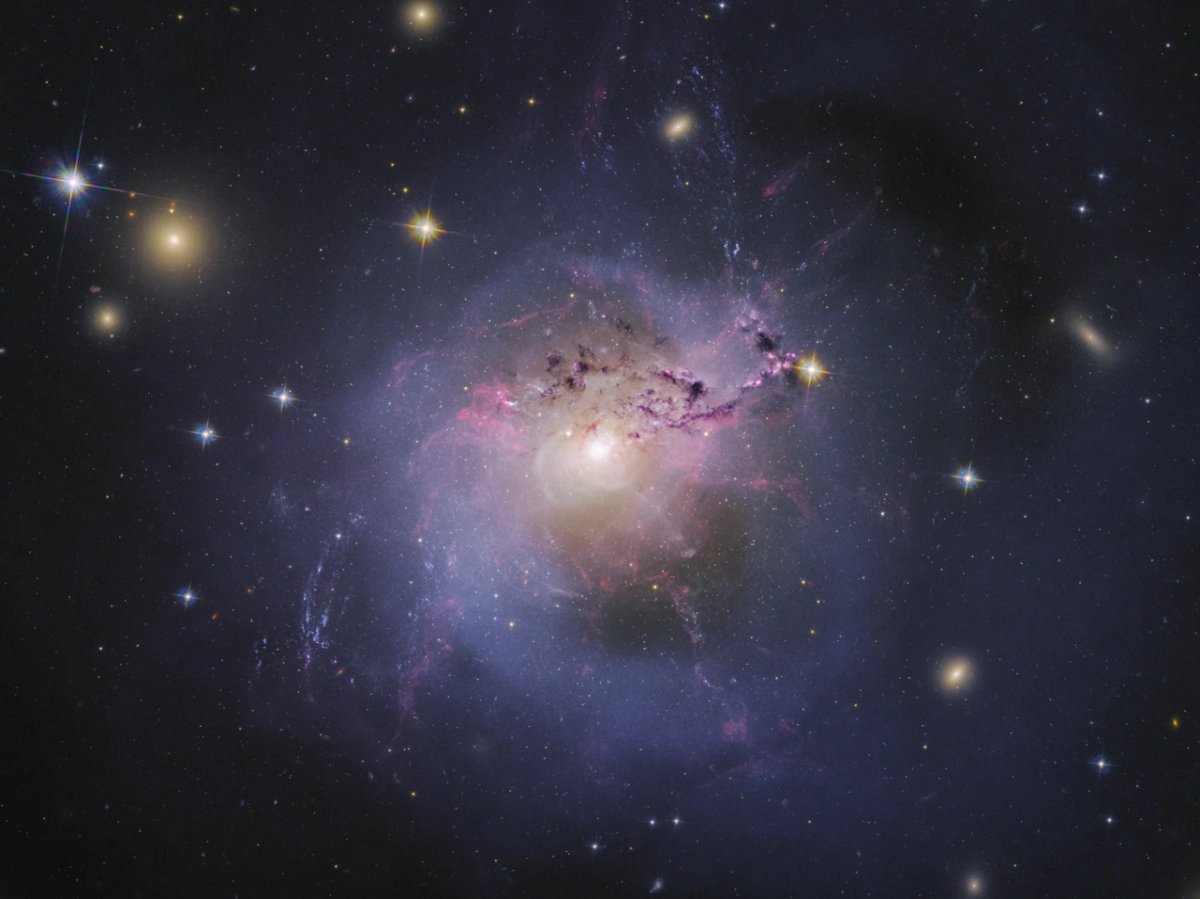
Perseus A (NGC 1275). Red: ACS/WFC F625W Green: ACS/WFC F550M Blue: ACS/WFC F435W. Image credit: Judy Schmidt (CC BY 2.0)
The high velocity system is a dusty spiral galaxy whose spiral arms have been severely distorted. They appear as dark filaments in front of the massive elliptical galaxy towards which it is moving.
The remnant of the spiral galaxy lies at least 200,000 light years from the supergiant elliptical galaxy and is not affecting it. However, it is itself being disrupted by the strong tidal interactions and ram pressure as it moves through the dense intracluster medium. The interactions are stripping the gas from the galaxy and triggering massive bursts of star formation inside it.
The central elliptical galaxy hosts a vast network of filaments made of gas, that emit spectral lines. It contains an active galactic nucleus (AGN) with a central supermassive black hole. The AGN produces bubbles of relativistic plasma that stretch out the long gaseous filaments. It feeds on infalling material and is surrounded by a disk of molecular gas. The core of the gas disk and the black hole have an estimated mass of 800 million solar masses.
The central black hole is the main source of X-ray emission in the galaxy. As infalling gas spirals into the black hole, it produces X-rays.
The filaments observed in NGC 1275 extend far beyond the central cluster galaxy, into the intracluster medium. There, they meet the exceptionally hot, X-ray emitting gas. An average filament contains around 1 million solar masses of gas. It is around 200 light years wide and up to 20,000 light years long.
The filamentary nebula around NGC 1275 is a large, complex structure that extends dozens of kiloparsecs from the active galaxy. It was first reported by the German-American astronomer Rudolph Minkowski in 1959.
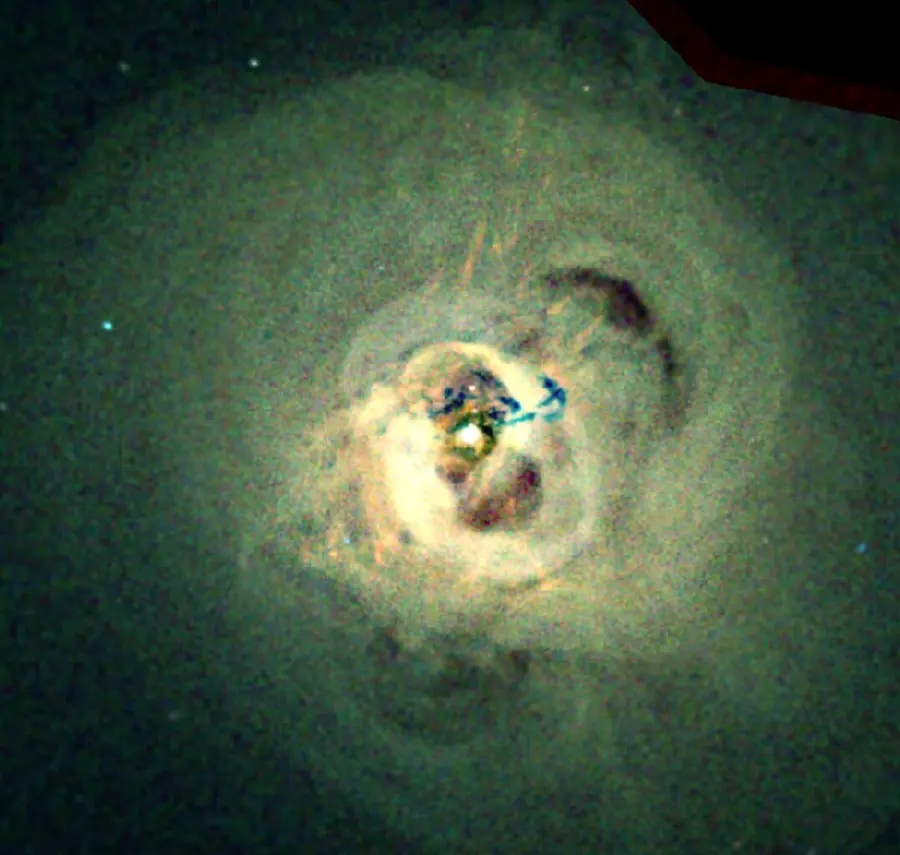
An accumulation of 270 hours of Chandra observations of the central regions of the Perseus galaxy cluster reveals evidence of the turmoil that has wracked the cluster for hundreds of millions of years. One of the most massive objects in the universe, the cluster contains thousands of galaxies immersed in a vast cloud of multimillion degree gas with the mass equivalent of trillions of suns. Enormous bright loops, ripples, and jet-like streaks are apparent in the image. The dark blue filaments in the center are likely due to a galaxy that has been torn apart and is falling into NGC 1275, a.k.a. Perseus A, the giant galaxy that lies at the center of the cluster. Special processing designed to bring out low and high pressure regions in the hot gas has uncovered huge low pressure regions (shown in purple in the accompanying image overlay, and outlined with the white contour). These low pressure regions appear as expanding plumes that extend outward 300,000 light years from the supermassive black hole in NGC 1275. The hot gas pressure is assumed to be low in the plumes because unseen bubbles of high-energy particles have displaced the gas. The plumes are due to venting from the vicinity of the supermassive black hole. The venting produces sound waves which heat the gas throughout the inner regions of the cluster and prevent the gas from cooling and making stars at a high rate. This process has slowed the growth of one of the largest galaxies in the Universe. It provides a dramatic example of how a relatively tiny, but massive, black hole at the center of a galaxy can control the heating and cooling behavior of gas far beyond the confines of the galaxy. Image: NASA/CXC/IoA/A.Fabian et al. (PD)
Imaging of the circumgalactic medium has revealed that the nebula has an angular size of 218 by 136 arcseconds, corresponding to a physical size of 80 by 50 kiloparsecs (260,925 by 163,078 ly). Observations with the Hubble Space Telescope (HST) have confirmed that the nebula lacks young stars, indicating that star formation did not play a significant role in the formation of the nebula.
The presence of the filaments in the much hotter intergalactic cloud has posed a mystery to astrophysicists. The filaments are much cooler than the surrounding gas and it is uncertain how they still exist. Some have proposed that they are held together by weak magnetic fields.
The supergiant elliptical galaxy contains a vast amount of molecular hydrogen, equivalent to 13 billion solar masses. This gas flows from the intracluster medium and drives active star formation.
In 2023, observations with the Karl G. Jansky Very Large Array (JVLA) revealed another absorbing system in addition to the previously known high-velocity system. A team of astronomers led by R. Morganti, the Netherlands Institute for Radio Astronomy, identified the system as gas stripped from a foreground galaxy that is currently falling into the Perseus Cluster.
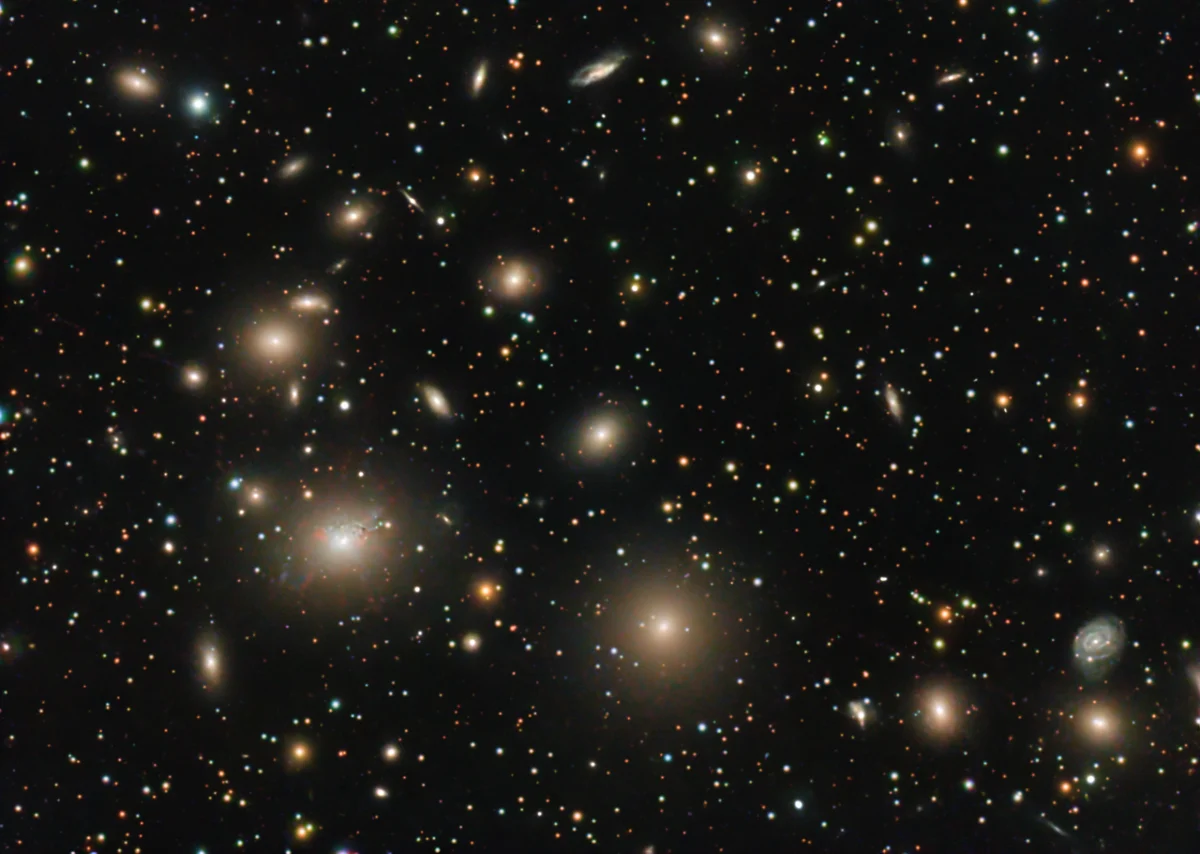
Perseus Cluster, image credit: Juan Lacruz (CC BY 4.0)
Facts
The galaxy NGC 1275 was discovered by the German-born British astronomer William Herschel on October 17, 1786. Herschel spotted the object in his 18.7-inch reflector and catalogued it as III 574, describing it as a “faint nebula.” He discovered two other nearby galaxies on the same night, NGC 1293 and NGC 1294.
Perseus A is the brightest member of the Perseus Cluster. The massive galaxy cluster contains over a thousand member galaxies. Other bright members include the lenticular galaxy NGC 1277 and the elliptical galaxies NGC 1265, NGC 1272, and NGC 1278.
The Perseus Cluster lies within the much larger Pisces-Perseus Supercluster, a chain of galaxy clusters that takes up over 40 degrees of the apparent sky.
NGC 1275 hosted three supernovae observed since the 1960s. The supernova SN 1968A shone at magnitude 15.5 and was discovered on January 25, 1968. SN 2005mz was discovered on December 31, 2005, and had an apparent magnitude of 18.2. It was classified as a type Ia supernova.
The most recent supernova, SN 2024xav, was detected on October 2, 2024. It had a visual magnitude of 18.63 and was classified as a type II-P supernova, triggered by the core collapse of a massive star.
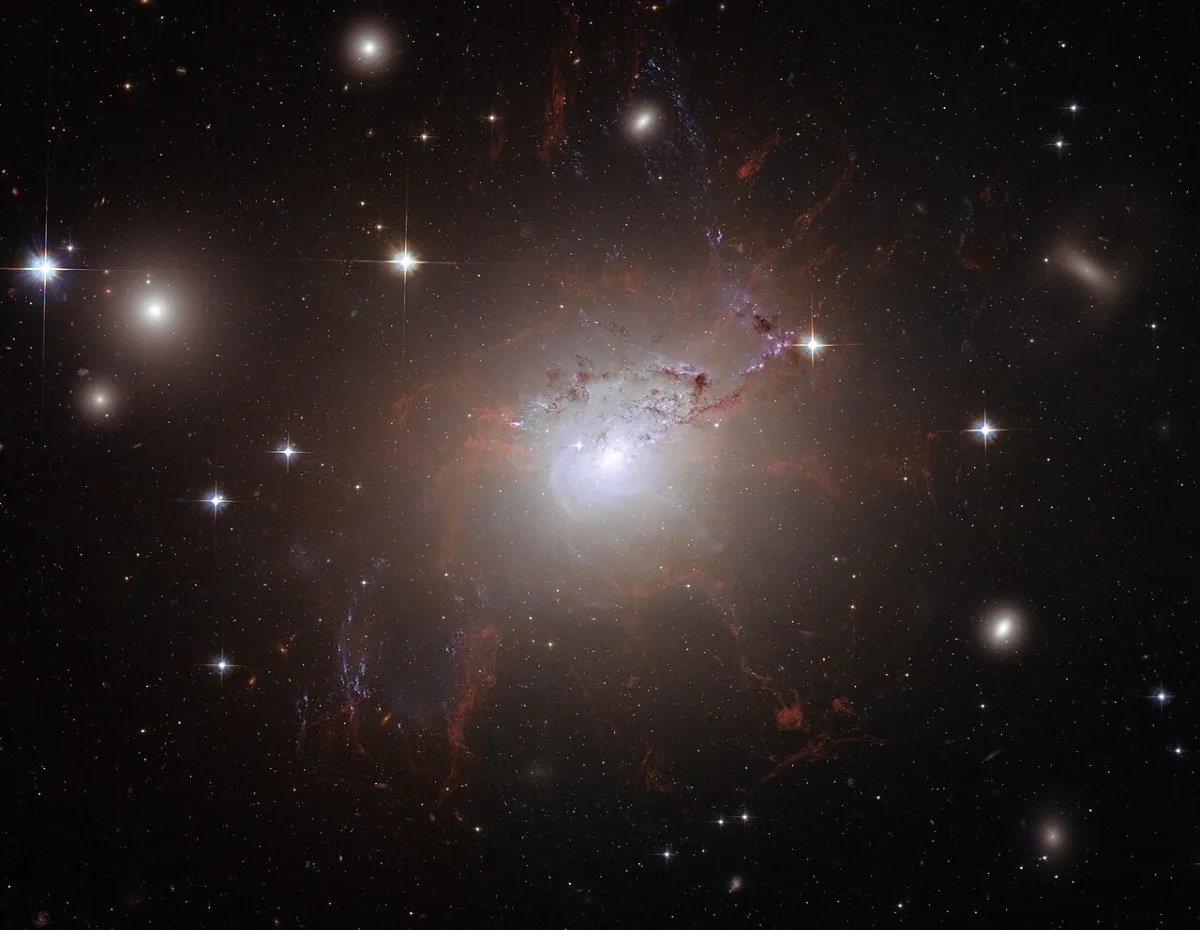
With this image, Hubble became the first to resolve giant but delicate filaments of gas shaped by strong magnetic fields around Caldwell 24 — an elliptical galaxy also known as Perseus A and cataloged as NGC 1275. Scientists believe that the hearts of most large galaxies may host a supermassive black hole, with millions or even billions of times the Sun’s mass. As gas falls toward the black hole, it gathers into a so-called accretion disk and becomes compressed and heated, ultimately emitting X-rays. Caldwell 24 is known to scientists as an “active galaxy,” with its central black hole generating unusually powerful X-ray and radio emission. The tendrils that reach out beyond the galaxy are the only visible-light manifestation of the black hole’s effect on the surrounding gas within the cluster of galaxies that Caldwell 24 belongs to. Hubble’s observations of Caldwell 24, taken in visible light with the Advanced Camera for Surveys in 2006, marked the first time the individual threads of gas that make up the filaments were resolved. These wispy structures extend up to 20,000 light-years out into the cosmos — around 5,000 times farther than the distance between the Sun and its closest neighboring star, Proxima Centauri. An average filament contains about a million times more mass than our Sun. The filaments are formed when cold gas from the core of the galaxy is dragged out in the wake of the rising bubbles blown by the black hole. These gossamer strands have somehow withstood the hostile, high-energy environment of the galaxy cluster for over 100 million years. Astronomers believe that magnetic fields may hold the charged gas in place, acting against the tendency to either disperse and evaporate or collapse to form new stars. Credit: NASA, ESA and the Hubble Heritage (STScI/AURA)-ESA/Hubble Collaboration; Acknowledgment: A. Fabian (Institute of Astronomy, University of Cambridge, UK) (CC BY 2.0)
How to find NGC 1275
The centre of the Perseus Cluster appears 2 degrees east and half a degree north of the bright Algol (Beta Persei). NGC 1275 can be found about a third of the way from Algol to the fainter F-type bright giant Nu Persei.
Several other bright members of the Perseus Cluster appear in the same field of view. NGC 1278 appears to the north, NGC 1274 to the northwest, NGC 1273 to the west, and NGC 1272 to the southwest of NGC 1275.
Perseus A and other brighter members of the Perseus Cluster can be seen in large amateur telescopes. With an angular size of only 2.2 by 1.7 arcminutes, NGC 1275 appears as a small patch of light in 8-inch telescopes. Larger instruments will show the galaxy’s oval shape with the bright nucleus, as well as several other bright members of the Perseus Cluster.
The best time of the year to observe Perseus A and other deep sky objects in Perseus is during the month of December, when the constellation is high above the horizon in the early evening. At declination +41° 31′, NGC 1275 never rises for observers south of the latitude 48° S.
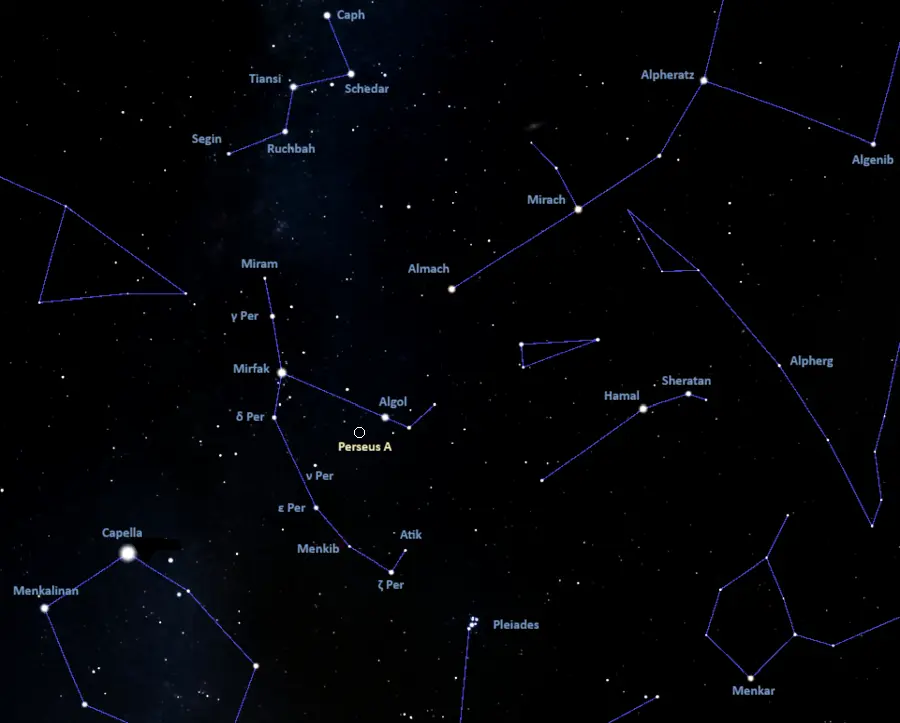
NGC 1275 location, image: Stellarium
NGC 1275 – Perseus A
| Constellation | Perseus |
| Object type | Type 1.5 Seyfert galaxy |
| Morphological type | cD;pec;NLRG |
| Right ascension | 03h 19m 48.1599902040s |
| Declination | +41° 30′ 42.108850836″ |
| Apparent magnitude | 12.48 |
| Apparent size | 2.2′ × 1.7′ |
| Distance | 225.19 ± 10.29 million light-years (69.044 ± 3.154 megaparsecs) |
| Size | ~295,000 light-years (90.45 kiloparsecs) |
| Redshift | 0.01681333 ± 0.0005 |
| Heliocentric radial velocity | 4,998 ± 150 km/s |
| Names and designations | Perseus A, Per A, NGC 1275, Caldwell 24, C 24, 3C 84, 3CR 84, X Per XR-1, UGC 2669, Markarian 1505, Mrk 1505, LEDA 12429, PGC 12429, MCG +07-07-063, CGCG 540-103, NVSS J031948+413042, NRAO 132, UZC J031948.2+413041, IRAS 03164+4119, IRAS F03164+4119, 2MASX J03194823+4130420, 2MASXI J0319482+413042, WB 0316+4119, SDSS J031948.15+413042.1, WSTB 22W24, WSTB 22W43, WISE J031948.16+413042.3, WISEA J031948.16+413042.3, 2XMM J031948.1+413042, SWIFT J0319.7+4132, SWIFT J0319.9+4131, QSO B0316+413, QSO B0316+413, QDOT B0316294+411952, [BM99] 270, 2AGL J0320+4124, 2C 296, 4C 41.07, 1AGLR J0321+4137, CJF B0316+413, CGRaBS J0319+4130, CTA 22, DA 97, DB 22, FASHI J031946.81+413034.4, GRA B0316+41, TeV J0319+415, 0FGL J0320.0+4131, 1FGL J0319.7+4130, 2FGL J0319.8+4130, 3FGL J0319.8+4130, 4FGL J0319.8+4130, LHE 4, 1FHL J0319.9+4130, 2FHL J0319.8+4131, 3FHL J0319.8+4130, LJHY 71, FL8Y J0319.8+4130, 1FLE J0319+4118, GALEX J031948.1+413044, GB6 J0319+4130, GB6 B0316+4119, 87GB 031629.0+411957, ICRF J031948.1+413042, IERS B0316+413, INTREF 141, S4 0316+413, S4 0316+41, ISOSS J03198+4130, [OLK95] 0316+413, VRO 41.03.02, IVS B0316+413, [CG99] SA426-1, [DML87] 598, [HB91] 0316+413, [SLK2004] 382, WMAP J0319+4131, WMAP J0319+4130, WMAP 94, [DGW65] 13, [SRM2005] J031948.16+413042.1, [VDD93] 26, JCMTSE J031948.4+413043, JCMTSF J031948.4+413043, JVAS J0319+415, JVAS B0316+413, 1Jy 0316+413, 1Jy 0316+41, MASIV J0319+4130, RORF 0316+413, NEWPS5 J0319+4130, OHIO E 427, PBC J0319.7+4129, PCCS2 143 G150.56-13.25, PKS 0316+413, PSCz Q03164+4119, RGB J0319.8+4130, [HSN2016] J049.95+41.51, RX J0319.8+4131, 1RXS J031947.4+413052, [IN88] 0316+413 , [LO95] 0316+413, [WOB93] 03164+4119, [WCO2009] J031948+413013,[ZBO89] ACO 426-7, VSOP J0319+4130, [CHM2007] HDC 219 J031948.23+4130420, [CHM2007] LDC 224 J031948.23+4130420, [MRS2020] 691, [MO2001b] J031948.3+413041.3, AAVSO 0313+41, [VV2010c] J031948.2+413042, [VV98c] J031948.2+413042, [MRS2020] J031948.2+413042, [VV2000c] J031948.2+413042, [VV2003c] J031948.2+413042, [VV2006c] J031948.2+413042, [MGL2009] BZU J0319+4130, [MML2015] 5BZU J0319+4130, [M98c] 031629.9+411955, VCS1 J0319+4130, VLSS J0319.8+4130, Gaia DR1 239421714972514688, Gaia DR2 239421714972514688, Gaia DR3 239421714972514688 |
Images
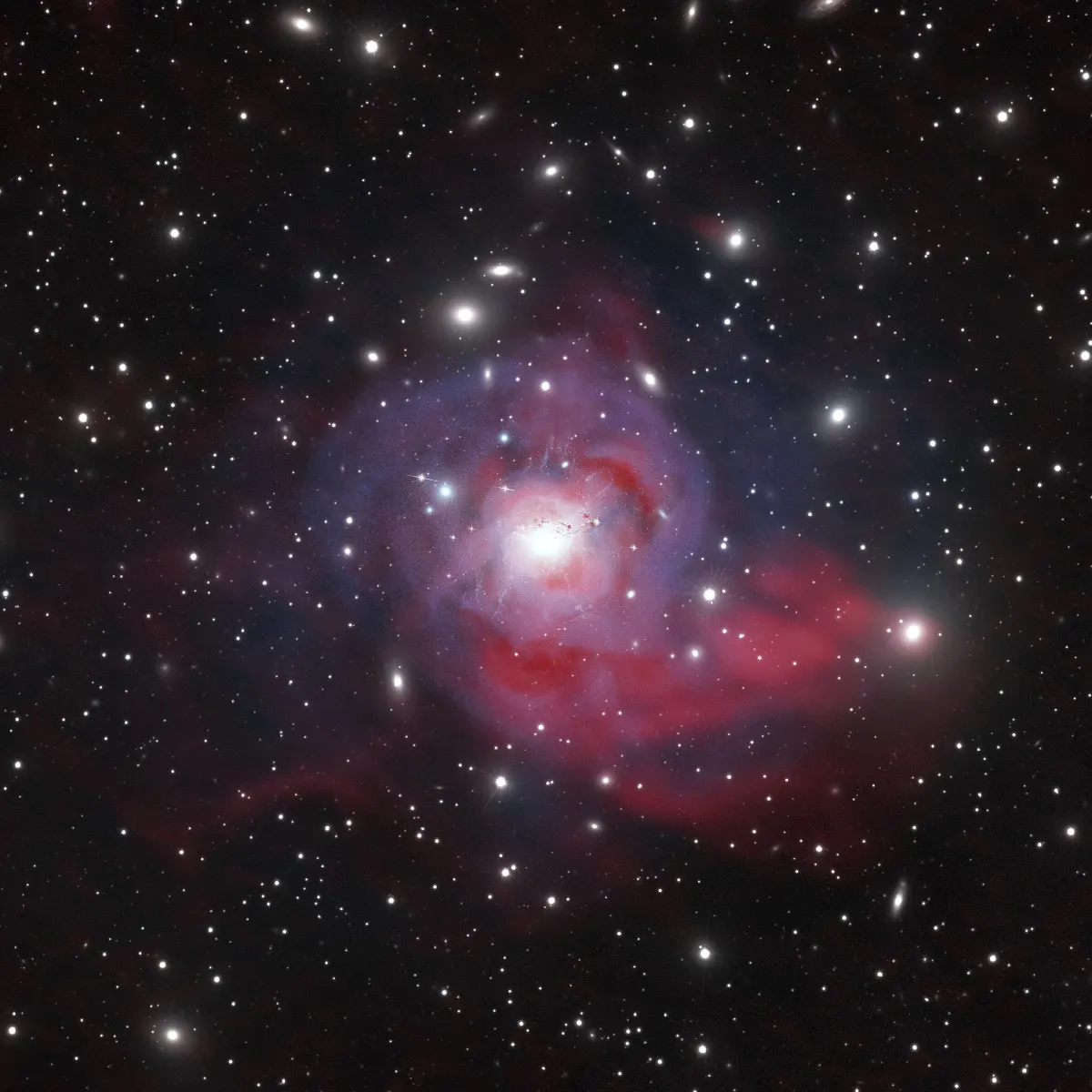
This large mosaic from the Sloan Digital Sky Survey telescope plunges us into the heart of the gigantic Perseus cluster. Located at 250 million light-years from Earth, it is, in fact, a neighbouring cluster of galaxies where its effervescence can be observed in detail. The gas found between the galaxies reaches 60 million degrees Celsius and emits a wealth of X-ray light caught by the Chandra space telescope (in blue). The giant elliptical galaxy NGC 1275 rests in the middle of the cluster, its spectacular filaments are imaged by the Hubble space telescope. This galaxy harbours an active supermassive black hole that powers strong jets of particles into the cluster. Equipped with new receivers, the Karl G. Jansky Very Large Array as allowed us to image the radio emission of these particles with an unprecedented level of detail (in pink), revealing a multitude of mysterious complex structures. Credit: Marie-Lou Gendron-Marsolais (Université de Montréal), Julie Hlavacek-Larrondo (Université de Montréal), Maxime Pivin Lapointe (CC BY 4.0)
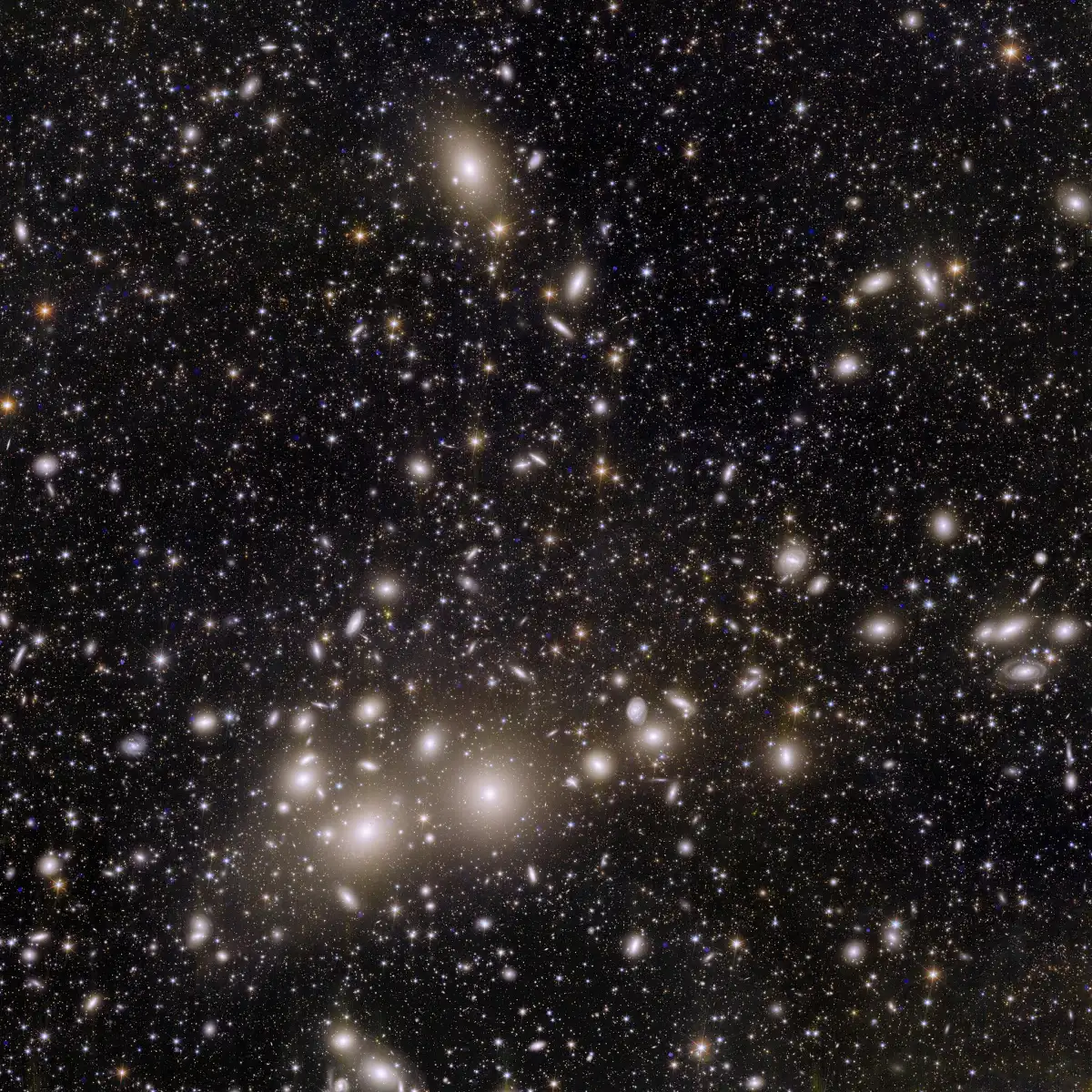
This incredible snapshot from the Euclid space telescope is a revolution for astronomy. The image shows 1,000 galaxies belonging to the Perseus Cluster, and more than 100,000 additional galaxies further away in the background, each containing up to hundreds of billions of stars. Many of these faint galaxies were previously unseen. Some of them are so distant that their light has taken 10 billion years to reach us. By mapping the distribution and shapes of these galaxies, cosmologists will be able to find out more about how dark matter shaped the Universe that we see today. This is the first time that such a large image has allowed us to capture so many Perseus galaxies in such a high level of detail. Perseus is one of the most massive structures known in the Universe, located ‘just’ 240 million light-years away from Earth, containing thousands of galaxies, immersed in a vast cloud of hot gas. Astronomers demonstrated that galaxy clusters like Perseus can only have formed if dark matter is present in the Universe. Image: ESA/Euclid/Euclid Consortium/NASA image processing by J.-C. Cuillandre (CEA Paris-Saclay) G. Anselmi (CC BY-SA 3.0 IGO)
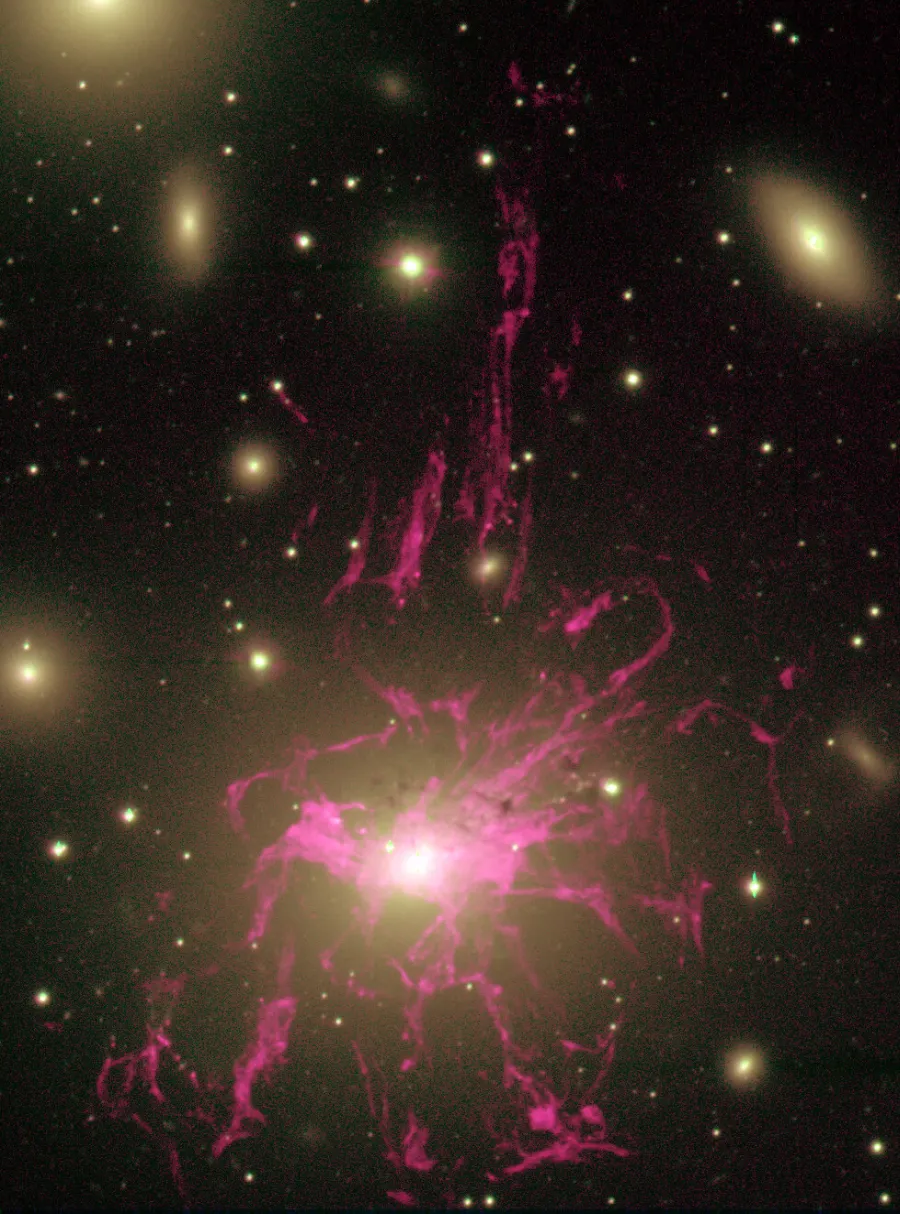
This image shows a deep Hydrogen-alpha image of the brightest X-ray source in the sky, NGC1275, taken by the WIYN 3.5-meter telescope at Kitt Peak National Observatory near Tucson, AZ, in 1999.The filaments emanating from this galaxy are produced through largely unknown mechanisms, but they likely are the result of an interaction between the black hole in the center of the galaxy and the intracluster medium surrounding it. (The glowing background objects in this image are galaxies in that same galaxy cluster.) Image credit: C. Conselice/Caltech and WIYN/NOIRLab/NSF/AURA (CC BY 4.0)
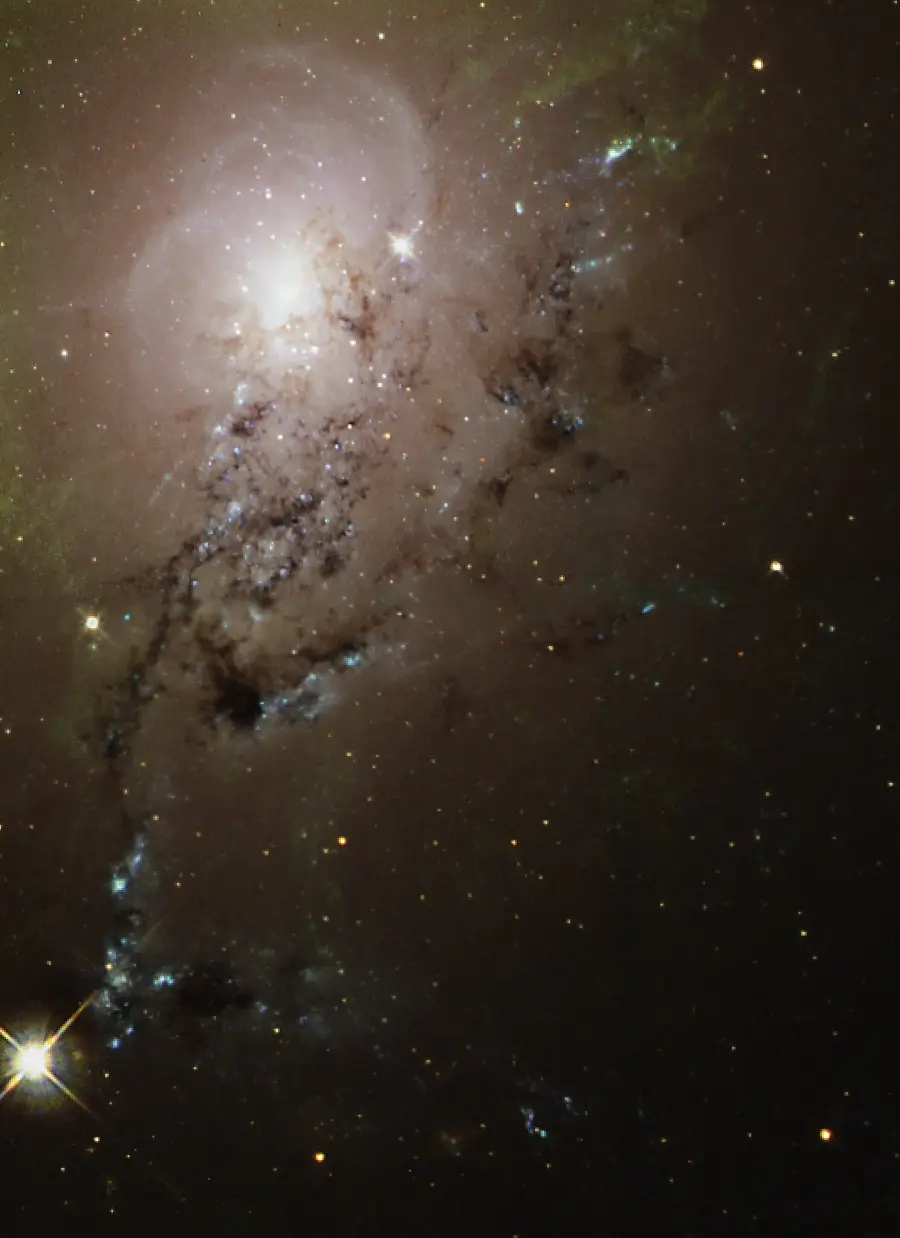
A dusty spiral galaxy appears to be rotating on edge, like a pinwheel, as it slides through the larger, bright galaxy NGC 1275, in this NASA/ESA Hubble Space Telescope image. These images, taken with Hubble’s Wide Field Planetary Camera 2 (WFPC2), show traces of spiral structure accompanied by dramatic dust lanes and bright blue regions that mark areas of active star formation. Credit: NASA/ESA and The Hubble Heritage Team (STScI/AURA) (PD)